
ComfyUI Adds Native 3D Gaussian Splat Generation with TripoSplat

Michael Rubloff

Michael Rubloff

Email
Copy Link
Twitter
Linkedin
Reddit
Whatsapp
TripoSplat

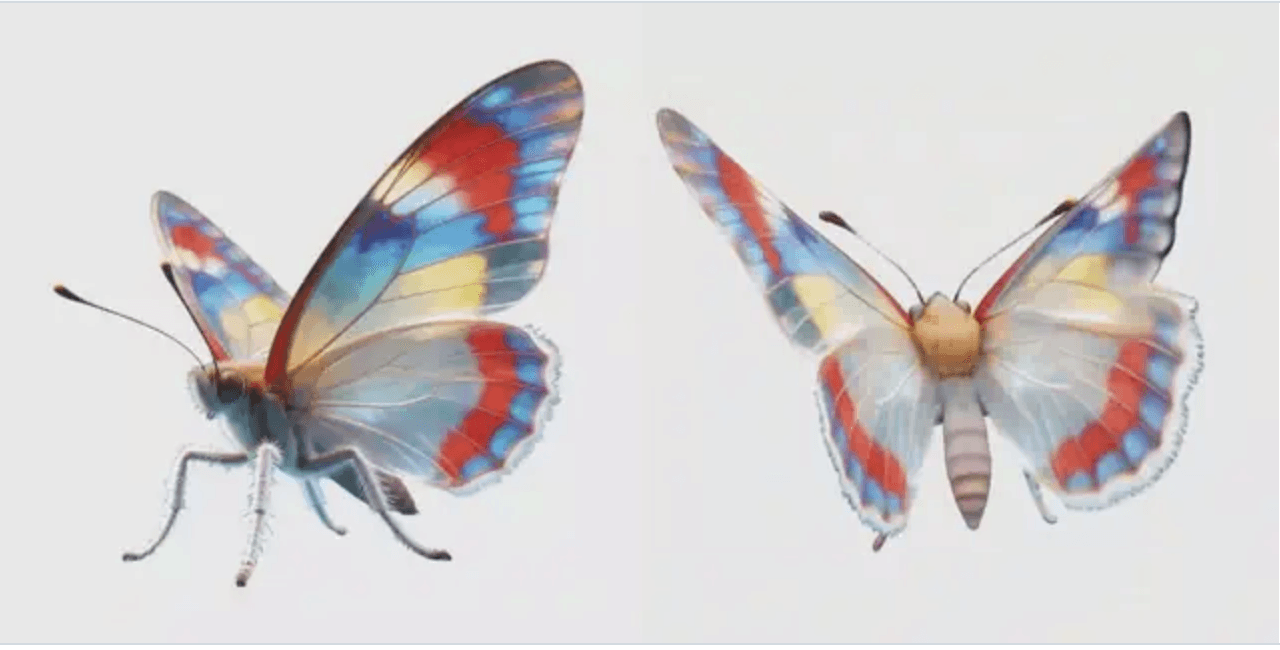
ComfyUI now turns a single image into a 3D Gaussian asset natively, through day zero support for TripoSplat, an open source image to gaussian splat model from Tripo (VAST AI) released under the MIT license. Updating ComfyUI to v0.23.0 exposes a TripoSplat workflow template in the Template Library. The template downloads the model, takes one uploaded image, and outputs a viewable Gaussian splat that drops into a modern 3D pipeline. Cloud and Desktop builds follow the v0.23.0 release.

Rather than spending the same number of Gaussians everywhere, the model concentrates geometry where the input image carries detail and stays lighter across simple regions, and it lets the user pick the detail level outright. Such as fewer Gaussians for background props, more for a hero asset, or several exported versions at different budgets in the manner of game level of detail.

The release is fully open. Model weights are published at huggingface.co/VAST-AI/TripoSplat and the inference code at github.com/VAST-AI-Research/TripoSplat, so the model runs locally and can be wired into custom workflows rather than sitting behind a service. Most commonly, people can expect to create 3D previews of stylized characters, environments, and props, 3D to 2D guidance, and AR/VR placement from a single concept image.

ComfyUI’s path into Gaussian Splatting predates this release, its earlier 3D support arrived through Comfy3D and VAST AI’s Triplane Gaussian, but native day-zero support for TripoSplat moves single-image splat generation into the shipped template set, with the model’s weights and code both open for local use. The downloadable workflow can be found on GitHub.

Featured

Recents

Platforms

three.js Ships Its Native Gaussian Splat Renderer and Splat Raycasting in r186

three.js r186 ships GaussianSplat, its first native Gaussian splat renderer, adding raycasting, per-mesh frustum culling and view-dependent spherical harmonics.

Michael Rubloff

Sep 9, 2026

Platforms

three.js Ships Its Native Gaussian Splat Renderer and Splat Raycasting in r186

three.js r186 ships GaussianSplat, its first native Gaussian splat renderer, adding raycasting, per-mesh frustum culling and view-dependent spherical harmonics.

Michael Rubloff

Platforms

PlayCanvas Releases SuperSplat 3.0

SuperSplat 3.0 rewrites PlayCanvas's Gaussian splat editor on WebGPU only, removing the WebGL2 path, cutting peak memory, and adding sort-free Stochastic Alpha.

Michael Rubloff

Sep 8, 2026

Platforms

PlayCanvas Releases SuperSplat 3.0

SuperSplat 3.0 rewrites PlayCanvas's Gaussian splat editor on WebGPU only, removing the WebGL2 path, cutting peak memory, and adding sort-free Stochastic Alpha.

Michael Rubloff

XGRIDS Adds WebXR Support to the LCC Web SDK in v0.6.3

XGRIDS LCC Web SDK v0.6.3 adds WebXR support to its Three.js and Cesium renderer, bringing browser-based headset viewing to LCC and LCC2 Gaussian splat scenes.

Michael Rubloff

Sep 8, 2026

XGRIDS Adds WebXR Support to the LCC Web SDK in v0.6.3

XGRIDS LCC Web SDK v0.6.3 adds WebXR support to its Three.js and Cesium renderer, bringing browser-based headset viewing to LCC and LCC2 Gaussian splat scenes.

Michael Rubloff

Splat Box Editor for Unity Now Ships Full Source Code

Simulacrum's $199 Splat Box Editor for Unity now includes full source code, with PLY and SPZ import and export, real-time relighting, shadow mapping and SSAO.

Michael Rubloff

Sep 4, 2026

Splat Box Editor for Unity Now Ships Full Source Code

Simulacrum's $199 Splat Box Editor for Unity now includes full source code, with PLY and SPZ import and export, real-time relighting, shadow mapping and SSAO.

Michael Rubloff

Michael Rubloff

Written by Michael Rubloff

Michael is the Founder and Managing Editor of Radiancefields.com

Email
Copy Link
Twitter
Linkedin
Reddit
Whatsapp

More from Michael Rubloff

More from Michael Rubloff

Platforms

three.js Ships Its Native Gaussian Splat Renderer and Splat Raycasting in r186

three.js r186 ships GaussianSplat, its first native Gaussian splat renderer, adding raycasting, per-mesh frustum culling and view-dependent spherical harmonics.

Michael Rubloff

Sep 9, 2026

three.js Gaussian Splatting

Platforms

three.js Ships Its Native Gaussian Splat Renderer and Splat Raycasting in r186

Michael Rubloff

Sep 9, 2026

three.js Gaussian Splatting

Platforms

three.js Ships Its Native Gaussian Splat Renderer and Splat Raycasting in r186

three.js r186 ships GaussianSplat, its first native Gaussian splat renderer, adding raycasting, per-mesh frustum culling and view-dependent spherical harmonics.

Michael Rubloff

Sep 9, 2026

three.js Gaussian Splatting

Platforms

PlayCanvas Releases SuperSplat 3.0

SuperSplat 3.0 rewrites PlayCanvas's Gaussian splat editor on WebGPU only, removing the WebGL2 path, cutting peak memory, and adding sort-free Stochastic Alpha.

Michael Rubloff

Sep 8, 2026

Supersplat 3.0

Platforms

PlayCanvas Releases SuperSplat 3.0

Michael Rubloff

Sep 8, 2026

Supersplat 3.0

Platforms

PlayCanvas Releases SuperSplat 3.0

SuperSplat 3.0 rewrites PlayCanvas's Gaussian splat editor on WebGPU only, removing the WebGL2 path, cutting peak memory, and adding sort-free Stochastic Alpha.

Michael Rubloff

Sep 8, 2026

Supersplat 3.0

XGRIDS Adds WebXR Support to the LCC Web SDK in v0.6.3

XGRIDS LCC Web SDK v0.6.3 adds WebXR support to its Three.js and Cesium renderer, bringing browser-based headset viewing to LCC and LCC2 Gaussian splat scenes.

Michael Rubloff

Sep 8, 2026

XGRIDS

XGRIDS Adds WebXR Support to the LCC Web SDK in v0.6.3

Michael Rubloff

Sep 8, 2026

XGRIDS

XGRIDS Adds WebXR Support to the LCC Web SDK in v0.6.3

XGRIDS LCC Web SDK v0.6.3 adds WebXR support to its Three.js and Cesium renderer, bringing browser-based headset viewing to LCC and LCC2 Gaussian splat scenes.

Michael Rubloff

Sep 8, 2026

XGRIDS