OpenAI Launches Sora and the World

Just earlier today OpenAI unveiled Sora, arguably the most consequential announcement in the past twelve months

Just earlier today OpenAI unveiled Sora, arguably the most consequential announcement in the past twelve months

Michael Rubloff

Michael Rubloff

Michael is the Founder and Managing Editor of Radiancefields.com

Sora

Just earlier today OpenAI unveiled Sora, arguably the most consequential announcement in the past twelve months

Sora is a text to video model announced just after midday on the East coast. To be blunt, it’s significantly stronger than any existing public method, surpassing others by orders of magnitude.

That’s a large claim, given the progression of technology. On its face, generating that level of high fidelity of video is extremely impressive, but where it becomes incredible is the generating of view consistent, parallax filled large areas. This unlocks the ability of large scale generative radiance fields.

What does this mean? It signifies that generating high-fidelity, large-scale radiance fields will soon be a reality for the public. The most challenging part is now behind us. It is now possible to generate view consistent locations and lifelike video output through text. That is so difficult. That is so completely difficult.

Like the vast majority of people, I only have access to the publicly available videos they’ve published, but that’s all I need. According to the Sora announcement, they’re able to generate 60 seconds of footage per prompt. I took the demo video of Santorini as my base. It’s only 9 seconds, but that’s sufficient.

From here, I simply slice the video up the same way I would with any existing video and run it through COLMAP and then into nerfstudio, but you can use any radiance field company. It works on the first try, with all camera poses found and trains like any other radiance field. Here is the resulting NeRF from Nerfacto.

This was taken from a 9 second video. Imagine what you could do with the full 60 seconds. Imagine what you can do with two minutes. This means, not only is it possible, they’ve already achieved it. I am very curious to see what OpenAI will do from here on out, but as this stands, they can generate large scale radiance fields from a text prompt. I hadn’t anticipated seeing large-scale generative radiance fields until much later.

Further, there is absolutely zero reason why this cannot be automated from here on out; in fact it would be trivial. When Sora is unleashed to the world at large, it will allow for the rapid creation of hyper-realistic three dimensional worlds.

Before my thoughts around radiance fields were limited to capturing the existing physical world and generating smaller objects, but what this means expands possibilities to an almost unfathomable level. You can generate hyperrealistic large scale three dimensional radiance field worlds based off of text.

This also has significant implications for existing radiance field companies with generative capabilities, such as Luma and CSM. Given this is now proven to be possible, I can only wonder what’s already been created behind closed doors. If they have not been pursuing this already, I imagine they now are.

Featured

Recents

Platforms

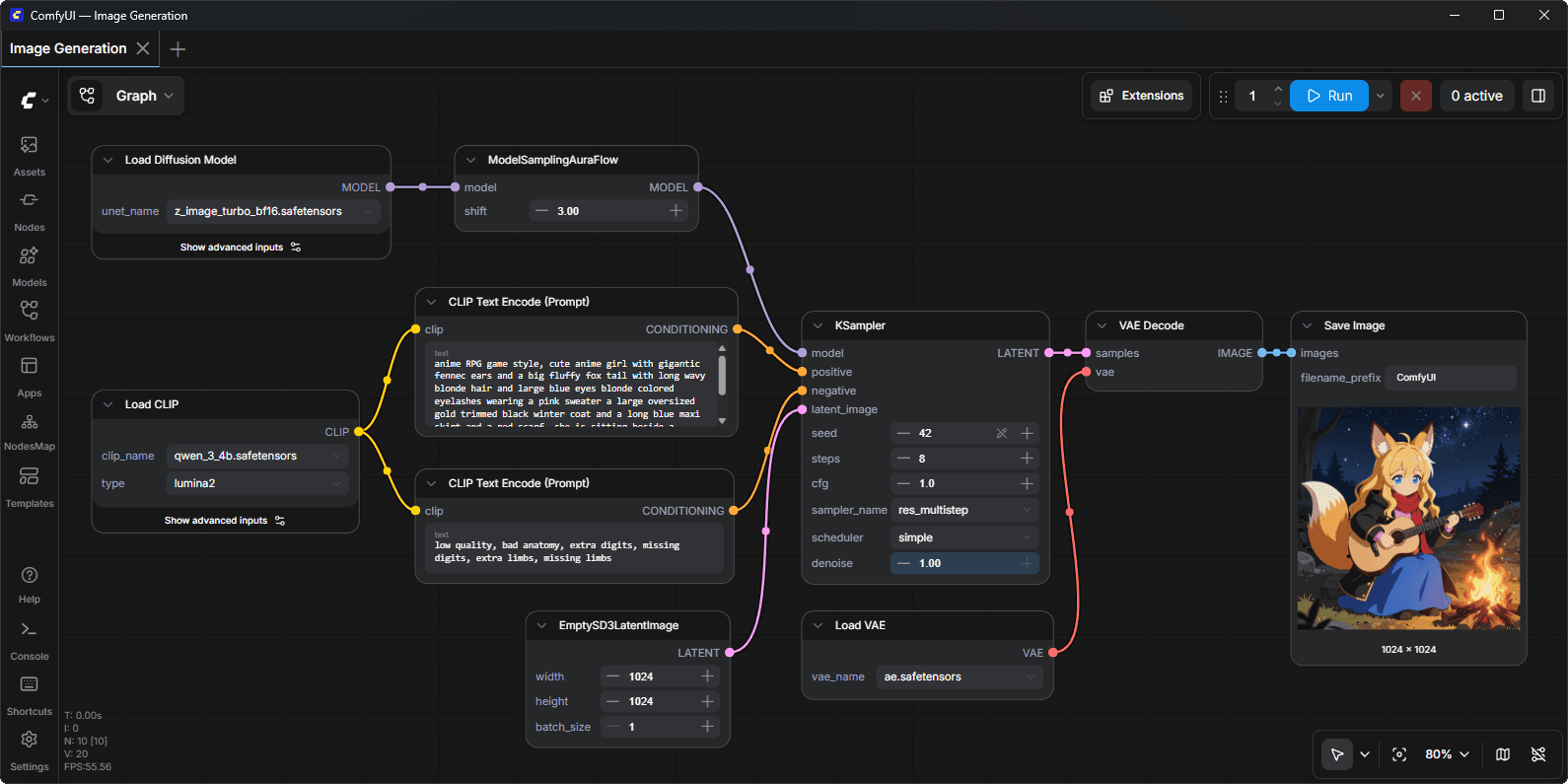
ComfyUI-InfiniSplat Brings the InfiniSplat Single-Image Gaussian Splatting Model to ComfyUI

ComfyUI-InfiniSplat 0.1.3 brings the InfiniSplat single-image Gaussian splatting model to ComfyUI, with native Preview Splat output and Gaussian PLY export.

Michael Rubloff

Oct 12, 2026

Platforms

ComfyUI-InfiniSplat Brings the InfiniSplat Single-Image Gaussian Splatting Model to ComfyUI

ComfyUI-InfiniSplat 0.1.3 brings the InfiniSplat single-image Gaussian splatting model to ComfyUI, with native Preview Splat output and Gaussian PLY export.

Michael Rubloff

Platforms

CHCNAV Releases CoViewer, a Free Desktop Viewer for Gaussian Splats

CHCNAV CoViewer is a free Windows desktop 3DGS viewer that opens PLY, 3D Tiles, and HSC models, with elevation clipping and offline access to CoCloud projects.

Michael Rubloff

Oct 10, 2026

Platforms

CHCNAV Releases CoViewer, a Free Desktop Viewer for Gaussian Splats

CHCNAV CoViewer is a free Windows desktop 3DGS viewer that opens PLY, 3D Tiles, and HSC models, with elevation clipping and offline access to CoCloud projects.

Michael Rubloff

Platforms

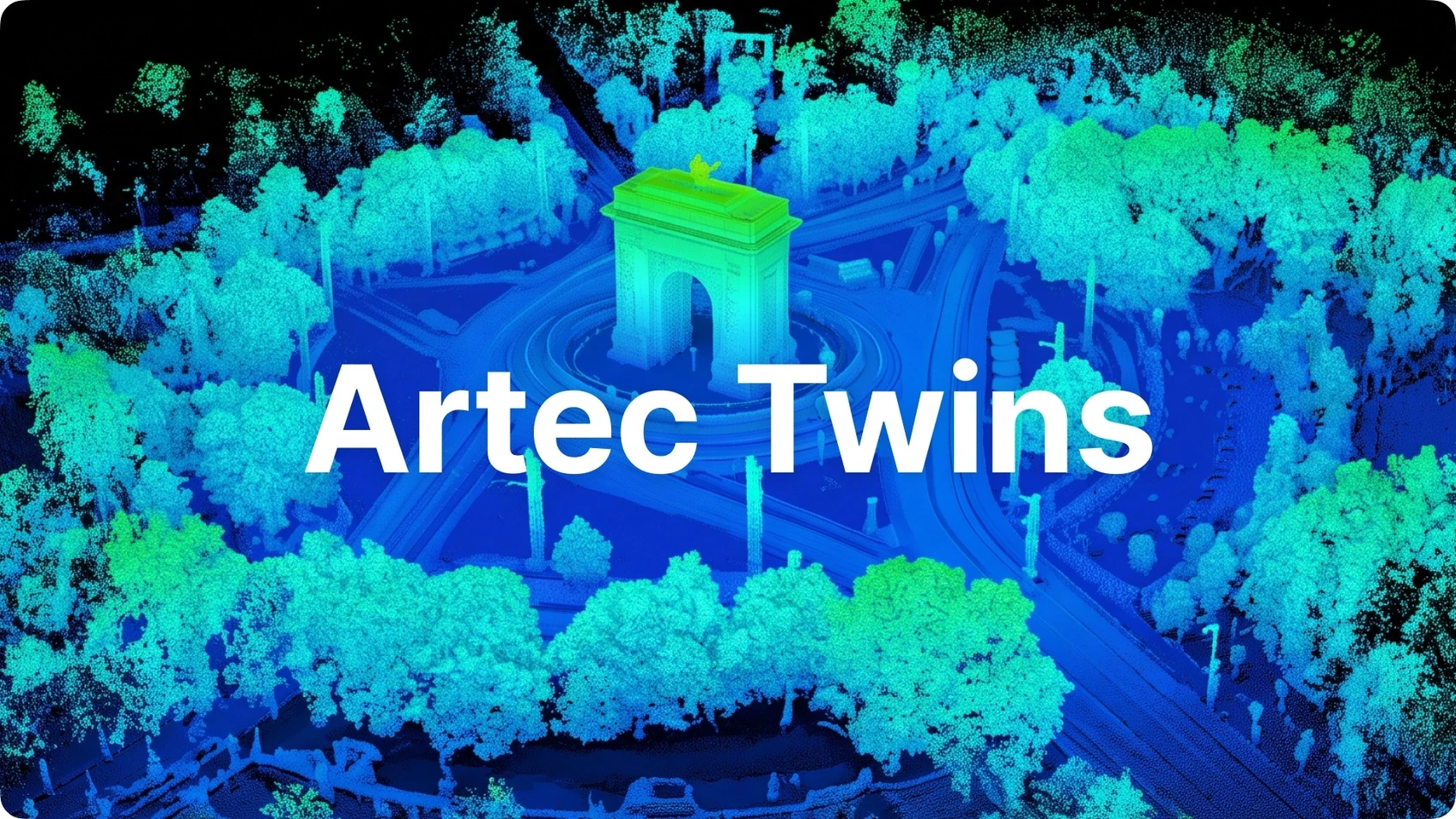
Artec 3D Launches Artec Twins, Its First Software to Generate and Render Gaussian Splats

Artec Twins is the first Artec 3D software to generate and render Gaussian splats, built from Artec Jet LiDAR or photos alongside point clouds and meshes.

Michael Rubloff

Oct 10, 2026

Platforms

Artec 3D Launches Artec Twins, Its First Software to Generate and Render Gaussian Splats

Artec Twins is the first Artec 3D software to generate and render Gaussian splats, built from Artec Jet LiDAR or photos alongside point clouds and meshes.

Michael Rubloff

Platforms

TACTYC Gaussian Splat v2.0 Renders and Relights Gaussian Splats in Cinema 4D With Redshift

TACTYC Gaussian Splat v2.0 renders and relights Gaussian splats in Cinema 4D with Redshift, building one textured card per splat with SH view-dependent color.

Michael Rubloff

Oct 10, 2026

Platforms

TACTYC Gaussian Splat v2.0 Renders and Relights Gaussian Splats in Cinema 4D With Redshift

TACTYC Gaussian Splat v2.0 renders and relights Gaussian splats in Cinema 4D with Redshift, building one textured card per splat with SH view-dependent color.

Michael Rubloff

Michael Rubloff

Written by Michael Rubloff

Michael is the Founder and Managing Editor of Radiancefields.com

More from Michael Rubloff

More from Michael Rubloff

Platforms

ComfyUI-InfiniSplat Brings the InfiniSplat Single-Image Gaussian Splatting Model to ComfyUI

ComfyUI-InfiniSplat 0.1.3 brings the InfiniSplat single-image Gaussian splatting model to ComfyUI, with native Preview Splat output and Gaussian PLY export.

Michael Rubloff

Oct 12, 2026

ComfyUI

Platforms

ComfyUI-InfiniSplat Brings the InfiniSplat Single-Image Gaussian Splatting Model to ComfyUI

Michael Rubloff

Oct 12, 2026

ComfyUI

Platforms

ComfyUI-InfiniSplat Brings the InfiniSplat Single-Image Gaussian Splatting Model to ComfyUI

ComfyUI-InfiniSplat 0.1.3 brings the InfiniSplat single-image Gaussian splatting model to ComfyUI, with native Preview Splat output and Gaussian PLY export.

Michael Rubloff

Oct 12, 2026

ComfyUI

Platforms

CHCNAV Releases CoViewer, a Free Desktop Viewer for Gaussian Splats

CHCNAV CoViewer is a free Windows desktop 3DGS viewer that opens PLY, 3D Tiles, and HSC models, with elevation clipping and offline access to CoCloud projects.

Michael Rubloff

Oct 10, 2026

CoViewer

Platforms

CHCNAV Releases CoViewer, a Free Desktop Viewer for Gaussian Splats

Michael Rubloff

Oct 10, 2026

CoViewer

Platforms

CHCNAV Releases CoViewer, a Free Desktop Viewer for Gaussian Splats

CHCNAV CoViewer is a free Windows desktop 3DGS viewer that opens PLY, 3D Tiles, and HSC models, with elevation clipping and offline access to CoCloud projects.

Michael Rubloff

Oct 10, 2026

CoViewer

Platforms

Artec 3D Launches Artec Twins, Its First Software to Generate and Render Gaussian Splats

Artec Twins is the first Artec 3D software to generate and render Gaussian splats, built from Artec Jet LiDAR or photos alongside point clouds and meshes.

Michael Rubloff

Oct 10, 2026

Artec

Platforms

Artec 3D Launches Artec Twins, Its First Software to Generate and Render Gaussian Splats

Michael Rubloff

Oct 10, 2026

Artec

Platforms

Artec 3D Launches Artec Twins, Its First Software to Generate and Render Gaussian Splats

Artec Twins is the first Artec 3D software to generate and render Gaussian splats, built from Artec Jet LiDAR or photos alongside point clouds and meshes.

Michael Rubloff

Oct 10, 2026

Artec

New to Gaussian Splatting? Start here

Radiance fields, explained from the ground up: what a Gaussian splat is, how to capture one, and which tools and gear to start with.

Newsletter

Keep up with the field.

New research, tools and captures from the Radiance Fields newsroom, in your inbox. Free, no spam.