
Rivian has acquired Third Dimension AI, the US startup behind SuperSim, a simulator that rebuilds driving scenes from sensor logs with gaussian splatting.
Third Dimension introduced SuperSim in December 2025 as a simulator built from a customer's own video, LiDAR, IMU and positional traces. Where a conventional driving simulator is assembled from meshes and materials in a game engine, SuperSim reconstructs the recorded scene with neural rendering and Gaussian splatting, then applies world modeling to render novel views and insert 3D objects that were never in the capture. Third Dimension pitched the product as a way to turn one drive into thousands of scenario variations with no artists in the loop, for autonomous vehicles, drones and industrial robots.
The platform turns real world data into "high-fidelity, controllable 3D environments" in which driving scenarios can be recreated and varied at scale, so its autonomy models can rehearse complex conditions without waiting for rare edge cases to occur on the road. The deal has closed and financial terms are not being disclosed. Third Dimension's leadership and technical staff join Rivian's Autonomy research and engineering teams. "Simulation is central to how we train and validate our autonomous driving systems," said James Philbin, Rivian's SVP of Autonomy and AI, adding that the technology "will strengthen and accelerate autonomy across our consumer and robotaxi roadmaps."
Third Dimension was founded in 2024 by CEO Tolga Kart and Piotr Sokolski, and its team of 15, many of them in the UK, moves into Philbin's autonomy and AI group, which TechCrunch reports gives Rivian room to expand its AI hub in London, with the group working on driver assistance and the self-driving system for the robotaxis Rivian plans to supply to Uber. The company had raised a $7 million seed round from investors including Abstract Ventures, MVP, Soma Capital and Solari Capital, according to TechCrunch. Philbin told TechCrunch that Rivian receives more than 400,000 driving sequences per day from customer vehicles with external camera sharing enabled, and Kart said simulators built on game engines leave a quality gap with the real world. In late 2024, I was fortunate enough to moderate a panel at their launch event in the United Kingdom.
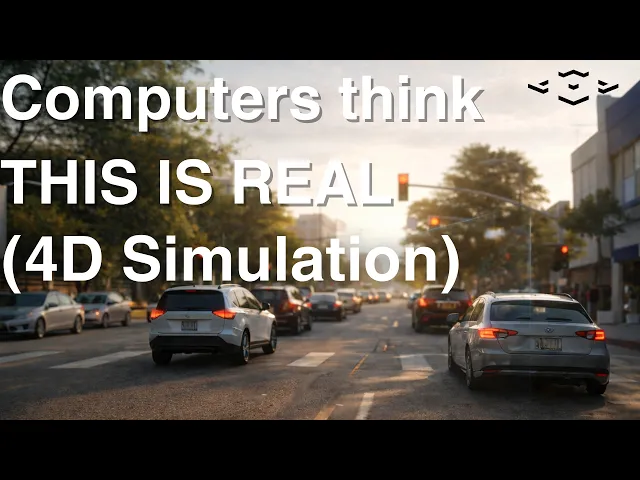
The Rivian release does not mention Gaussian splatting, world models, London or the size of the team. Third Dimension's own framing of the world model it is building, set out by Chief Research Officer Christian Rupprecht in August, is "a steerable, realistic data generator and simulator" that starts from "high-fidelity, multimodal reconstruction of the real world." Its researchers and engineers include people who previously worked at Tesla, Wayve, Google, Luma AI, NVIDIA and Niantic.
"Joining Rivian allows us to deploy our simulation technology at scale," said Kart, "accelerating both the generation of data needed to train autonomous systems and the validation needed to deploy them safely and reliably." Rivian announced the acquisition on October 22.

