
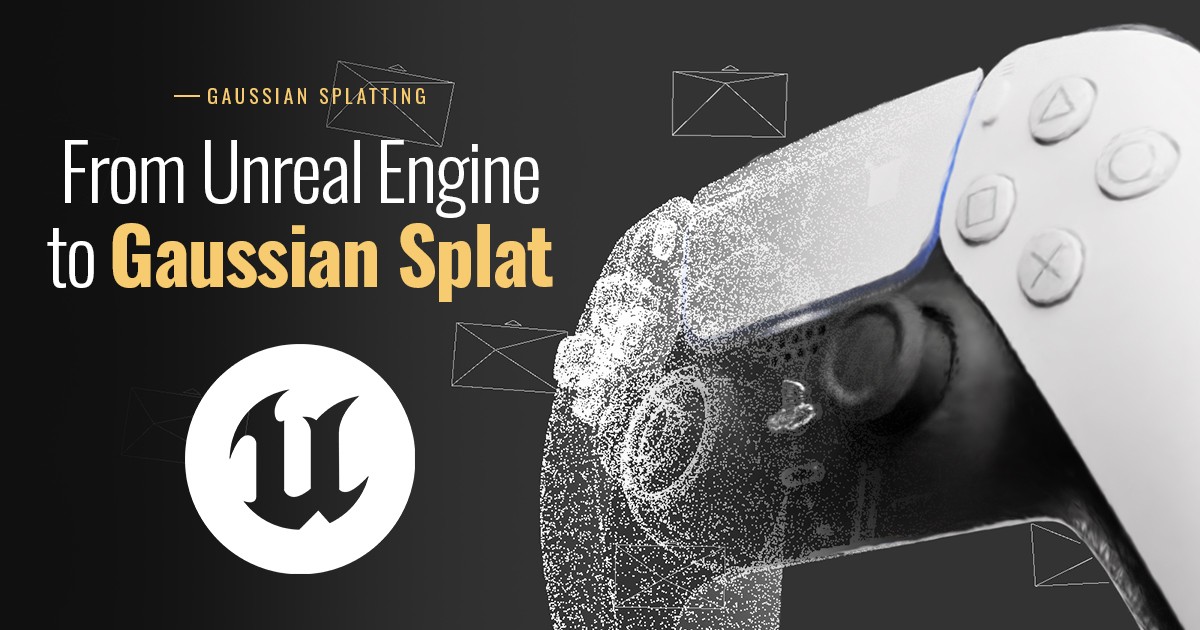
Atlux, the Unreal Engine visualization plugin developed by Jorge Valle Hurtado, has released v2.1.4 with a handful of updates relevant to Gaussian Splatting workflows.
For those unfamiliar, Atlux (formerly Atlux λ, and before that, MetaShoot) is a virtual photo studio and rendering toolkit for Unreal Engine. The λ (lambda) symbol has been removed from the plugin’s name due to non English character conflicts and issues with Epic’s FAB marketplace. It’s primarily aimed at product visualization and arch viz users, but it caught my attention when version 2.0 introduced a Capture tab last year that enables COLMAP and PLY export directly from Unreal Engine scenes, effectively creating a pipeline from UE to Gaussian Splatting software like Postshot and Lichtfeld Studio.
The plugin works by distributing virtual cameras around a target object using a Camera Volume system, simulating a real world camera array. Users can control camera count, distribution, and lens properties, then export the resulting renders with full COLMAP data (intrinsics, extrinsics, and point cloud) for reconstruction in external 3DGS tools.
The most notable update for the radiance fields community is an improvement to how the batch rendering process works for 3D Scan / COLMAP export. Previously, each camera in a scan setup was rendered as its own one frame sequence, meaning the render window restarted for every single frame. In v2.1.4, all cameras are now batched into a single sequence. It should reduce export times for anyone using the UE to 3DGS pipeline.
The update also introduces a volumetric emissive light source with parametric gradient masks, available in seven variations. These are compatible with Path Tracing, which means they can factor into the quality of scenes being rendered for Gaussian Splatting export.
Atlux supports Unreal Engine 5.4 through 5.7, runs on Windows and macOS, and is available on FAB. More details are available at atlux.one, and release notes are posted in their Discord.


