
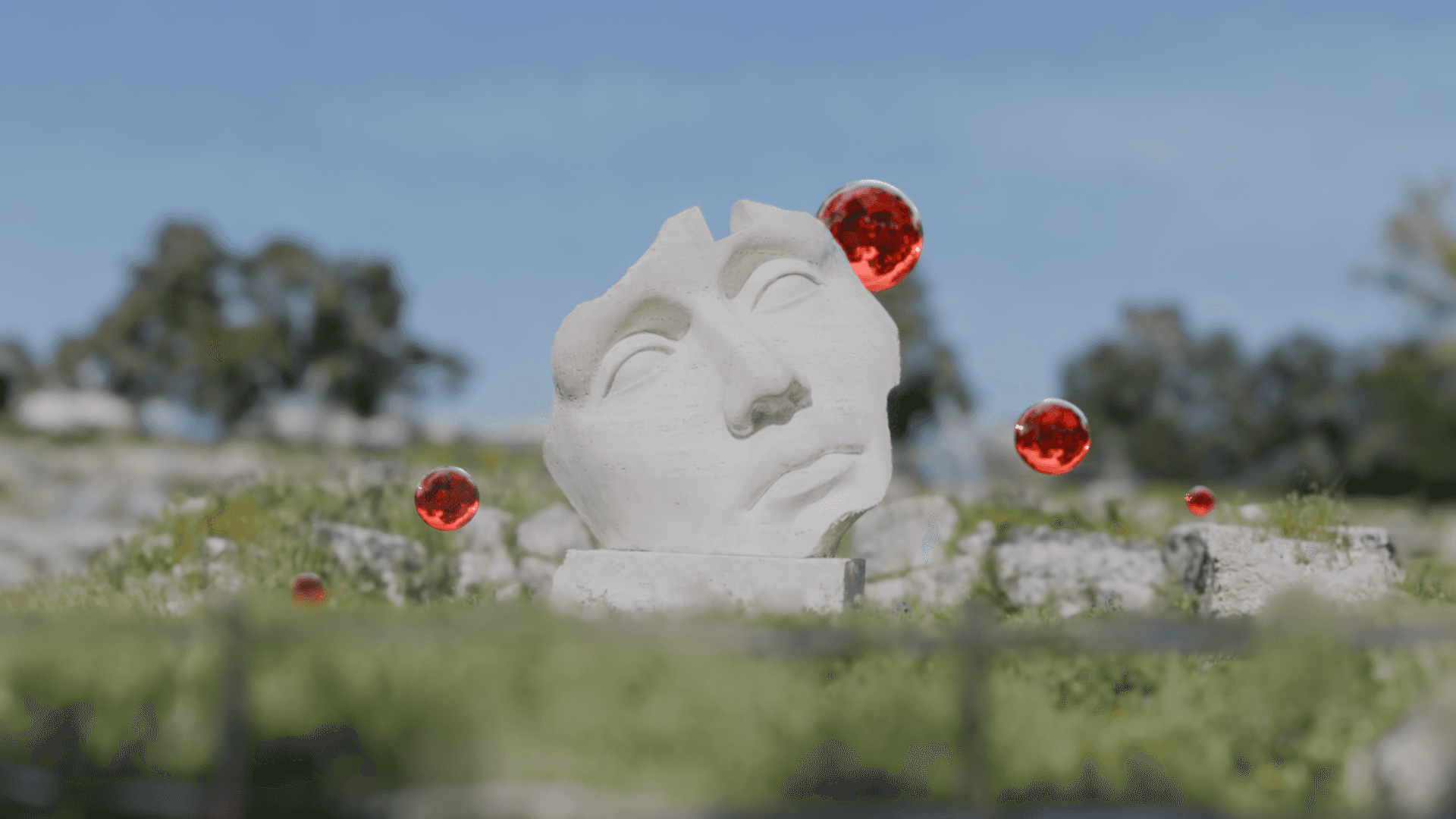
Blender has always been a comfortable home for artists working at the frontier of 3D capture. But for Gaussian Splatting practitioners, the experience has historically required an external viewer, a dedicated renderer, or a workaround that breaks the familiar node based flow most Blender artists rely on. BlendSplat, a new node based asset library released by developer SoerenSc3d, sets out to change that.
Built entirely around Geometry Nodes and EEVEE, BlendSplat lets you add, edit, and render Gaussian Splats without leaving Blender. Depth of Field and Motion Blur work through the standard camera and render settings. The viewport stays responsive because rendering is handled primarily in the shader. And because splats live inside the Geometry Nodes graph, the full procedural toolset is available. You can transform, instance, and generate new splats without exporting or reimporting.
The relighting feature is the most experimental part of the toolkit, and also the most interesting. Normal based relighting lets splats interact with scene lighting, point lights, area lights, and HDRIs, which opens up compositional possibilities that most GS workflows do not support at all.
However, shadows from other scene objects do not land on splats, and Cycles support remains limited. Alpha blending is dithered to keep the rendering logic in the shader, which introduces some noise at lower sample counts. Spherical Harmonics support is also limited to degree 2 currently.
The toolkit is free, available on Gumroad, with the source hosted on Codeberg. For artists who want to experiment with splats procedurally, or who want to composite real world captures into Blender scenes without leaving their familiar toolset, BlendSplat offers an exciting starting point.


