
Most radiance field captures assume the world holds still while the camera moves. A site photographed in August and again in January becomes two unrelated reconstructions, and everything that did not change between the visits is rebuilt from scratch each time.
ChronoFuseGS, from Tobias Batik, Diana Marin, Peter Kán and Hannes Kaufmann at TU Wien, takes several separately trained gaussian splatting models, one per capture date, and merges them into a single model. ChronoFuseGS records, for every Gaussian, which capture dates it belongs to. A splat from a stone structure captured in August can keep contributing to the January reconstruction, so the persistent parts of a site are refined with images from every visit at once.
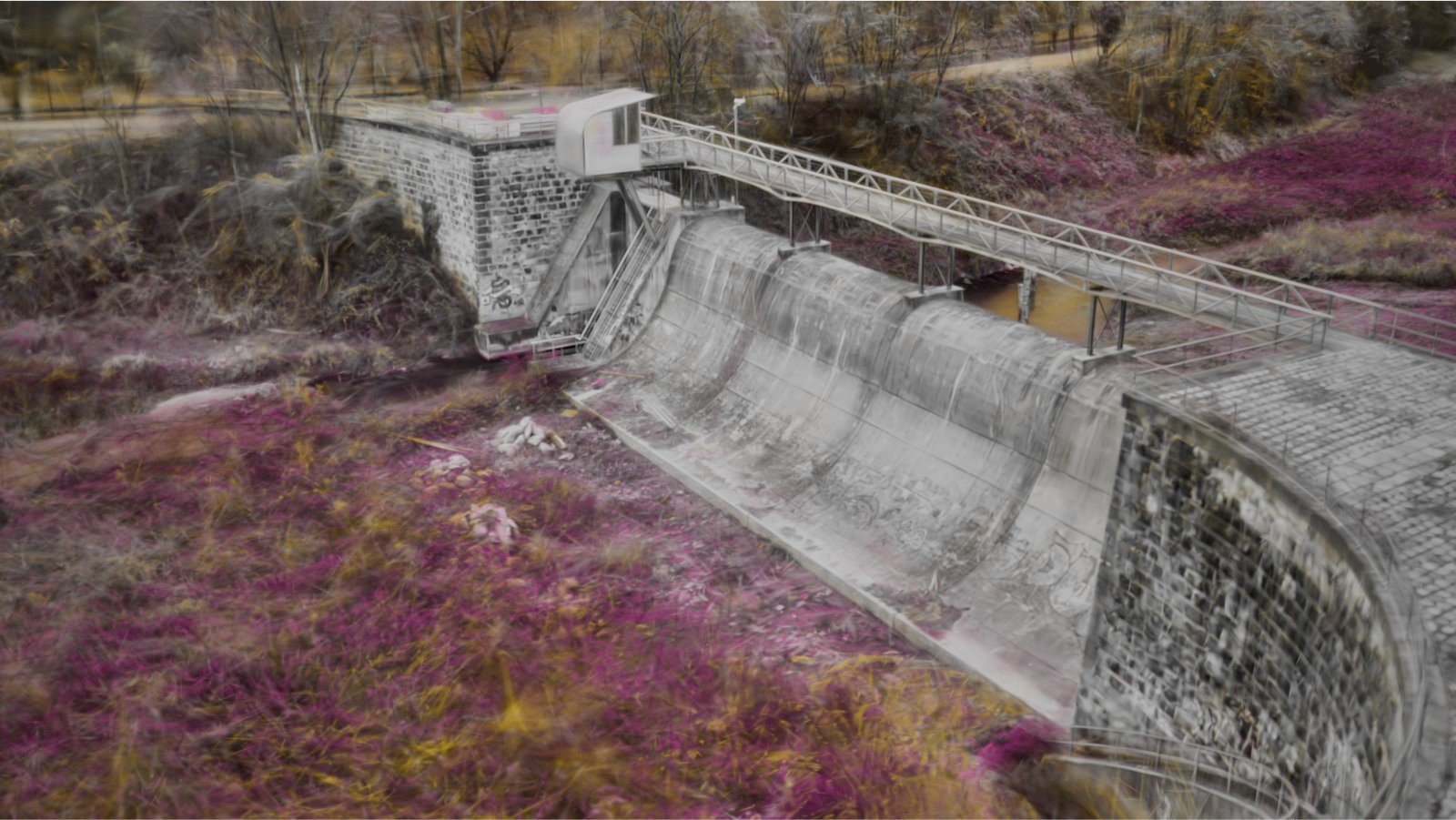
The same per splat record drives a change view. A viewer picks a span of dates, and whatever changed within it is highlighted while persistent parts keep their true color. Because the bookkeeping happens at the level of individual splats, the highlight can land on one part of an object or a natural structure rather than the whole thing. New capture dates can be added later without rebuilding the existing merged model.
The team tested the method on No Wolf in the Meadow, a dataset it recorded and has released publicly. The dataset covers a flood control site in Vienna of roughly 100 by 200 meters, flown with a consumer drone on repeated flight plans across eight recording days from August 2025 to March 2026, through seasonal vegetation changes, snow cover, flooding and renovation work. The authors report that the combined model beats individually trained single date models on novel view synthesis quality and recovers structural detail missing from the individual reconstructions.
The released code runs in three stages, training each capture date on its own, merging the models into one combined point cloud with a companion file holding each splat's contribution per date, and refining the result. The change visualization is an Unreal Engine 5.6 project tested only on Windows, and it currently renders base color without view dependent effects.
ChronoFuseGS has been accepted to Pacific Graphics 2026. The paper is available on arXiv, and the code and dataset are on GitHub.


