
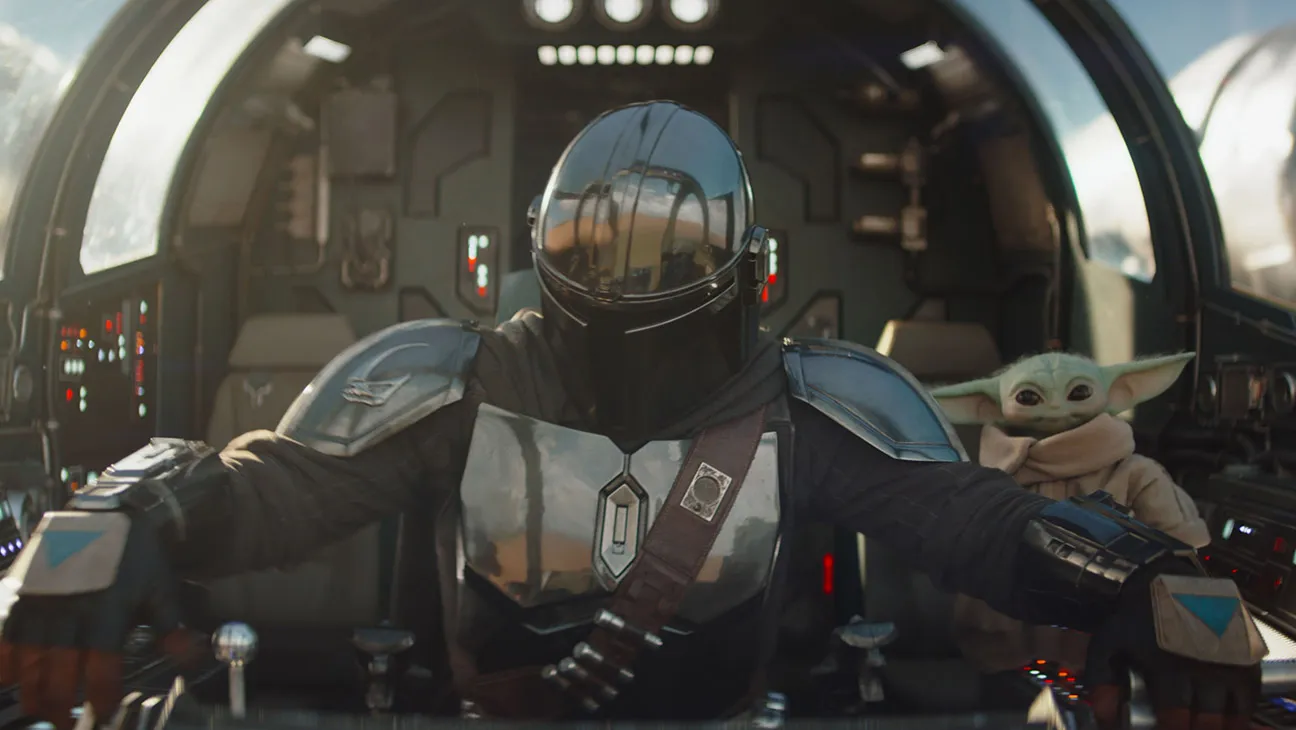
John Knoll, ILM executive creative director and production visual effects supervisor on The Mandalorian and Grogu, used gaussian splatting to capture the Razor Crest interior set.
The production had built the ship's interior at full scale, but the set was large, heavy and bolted to the stage floor. It could not move or share a frame with exterior locations, so any view up the ramp into the ship would have needed a separate shoot or a CG build. Gaussian splatting offered a third route.
Knoll saw a demonstration of the capture rig, then had cinematographer Dave Klein light the interior before the capture team moved through it with a camera array. Knoll described it in ILM's interview as "a 15, maybe 20-minute shoot to capture around 20,000 images of the inside there." The result, in his words, was "something that could be used any time I wanted to represent the interior," viewable from any angle in post. ILM describes the film as its first production use of the technique.
Gaussian splatting has reached feature films before. Proof used it to previsualize Jurassic World Rebirth, with early captures made on smartphones before the team moved to 360 cameras. Many will also point to Superman's parents in the 2025 film from Framestore. Every shot of the Kryptonian's parents in the film is 4DGS.
ILM does not state is who ran the capture, which software processed it, or whether the splat appears in final shots or served as reference.
In a new podcast episode with Jamie Benning, Knoll also covers a forty-eight inch Razor Crest miniature shot in an LED volume, stop motion animation by Tippett, and an Apple Vision Pro app that places the viewer in an IMAX auditorium, which the team used on set to check composition. Roughly forty-five percent of the film is shot for IMAX. The full episode is available on Filmumentaries.

