Gaussian splatting has moved unusually fast. In less than three years, it has gone from a research paper to something film crews are using as part of real production workflows. Over the past year, we have looked at projects like Superman and Dune: Prophecy, where gaussian splatting began to influence how scenes were explored, planned, and shot. Its impact shows up across departments, from how a director understands a location, to how teams align around a plan, to how production gains leverage before formal shooting even begins.
So when I learned that gaussian splatting played a role in the previsualization of Jurassic World Rebirth, I wanted to speak with Pawl Fulker of Proof, the visualization team on the project.
Fulker’s perspective is rooted in a long standing philosophy about previsualization. He wants the work to feel natural enough that people are not pulled out of the moment. He has always tried to avoid what he calls being “bumped” by artifacts that pull people away from the scene. It is the same principle that governs good lighting in film. When it works, you never notice it.
He described encountering that same problem years ago with animation in visualization work. When movement looked wrong, it limited how far he could push camera choices or staging. Discovering motion capture as a practical library of believable movement was an early inflection point. Once characters moved the way your brain expected, attention shifted back to other considerations.
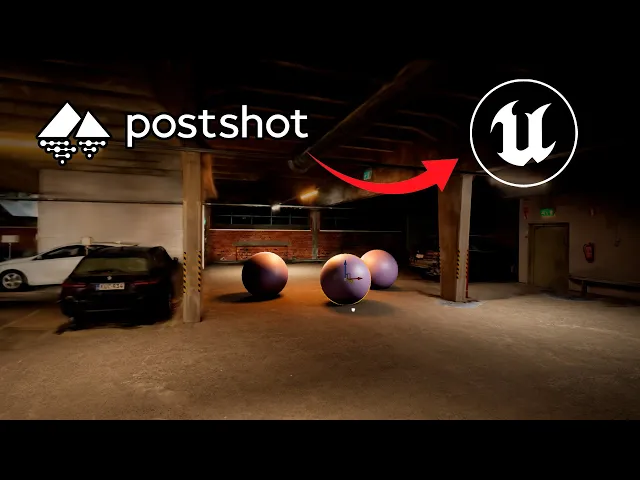
Gaussian splatting landed with a similar feeling. Much of that comes from its view-dependent support, which mirrors how we naturally experience the world. Fulker recalled an early “aha” moment watching a splatted underground parking garage on YouTube. Olli Huttunen stood in a real space, walked through it, processed the footage, and suddenly a virtual camera could move through the same environment. There was no ambiguity about what you were looking at.
It is easy to be impressed by polished demonstrations online, where years of experience are compressed into a few minutes of footage. What surprised Fulker in practice was how accessible the process actually was. The first attempts were captured on a smartphone. Seeing that the results were already usable, the team moved to 360 cameras. The next challenge was less technical and more cultural. Convincing others to trust a very new medium in a timeframe where the industry was actively worrying about AI. The strikes had sharpened concerns around data usage and training. Gaussian splatting sidesteps much of that anxiety. It is not generative, and Proof ran reconstructions locally, reconstructing only on their own footage.
Perhaps that is why buy-in arrived faster than expected. Fulker described it as an easy sell, and the example he gave had nothing to do with dinosaurs. It was Proof’s own office. He walked through it, captured it, reconstructed it, and showed it to David Vickery, VFX supervisor at ILM. The capture was aligned one to one, and as Fulker moved through the virtual space, he was physically bumping into tables that were actually there in the room.
In a production context having a faithful representation of what you will encounter on set builds confidence quickly. Timing was also a factor. Fulker placed their initial exploration around 2024, early enough that gaussian splatting itself was still young. Despite that, confidence grew and the capture workflow matured around those early lessons with clearer expectations around what would translate well and what required care. By the time the production reached Elstree Studios, the team had already internalized how to approach a location, what to avoid, and how to consistently come back with usable material.
Proof eventually set up a dedicated space at Elstree to review environments internally, bring in VFX supervision, and then, once confident, invite director Gareth Edwards to step inside the scenes using a VCAM workflow. In an ideal production, directors have months to iterate with previs teams. Rebirth did not have that luxury. Working under those constraints meant that whatever tools were used had to be immediately useful. Luckily they had gaussian splatting.
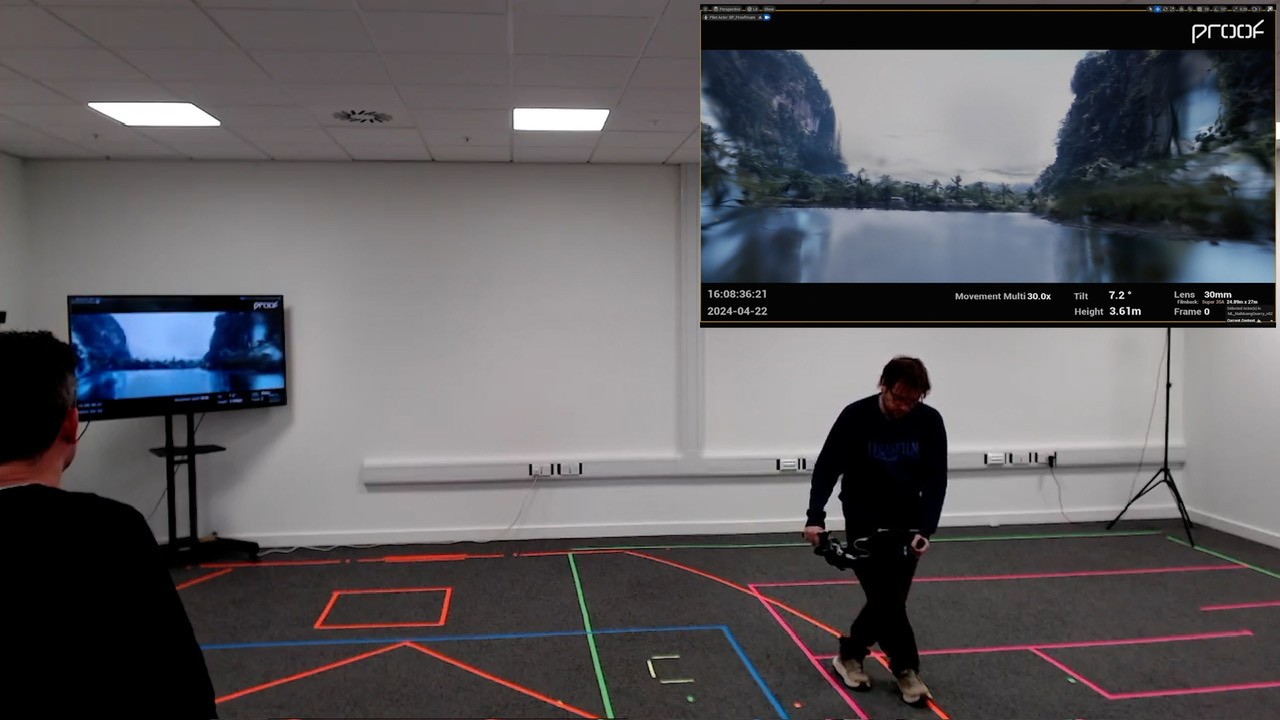
Less time was spent building long animated sequences as the default output. More time was spent working directly inside splatted reality, then packaging the director’s intent into something other departments could act on.
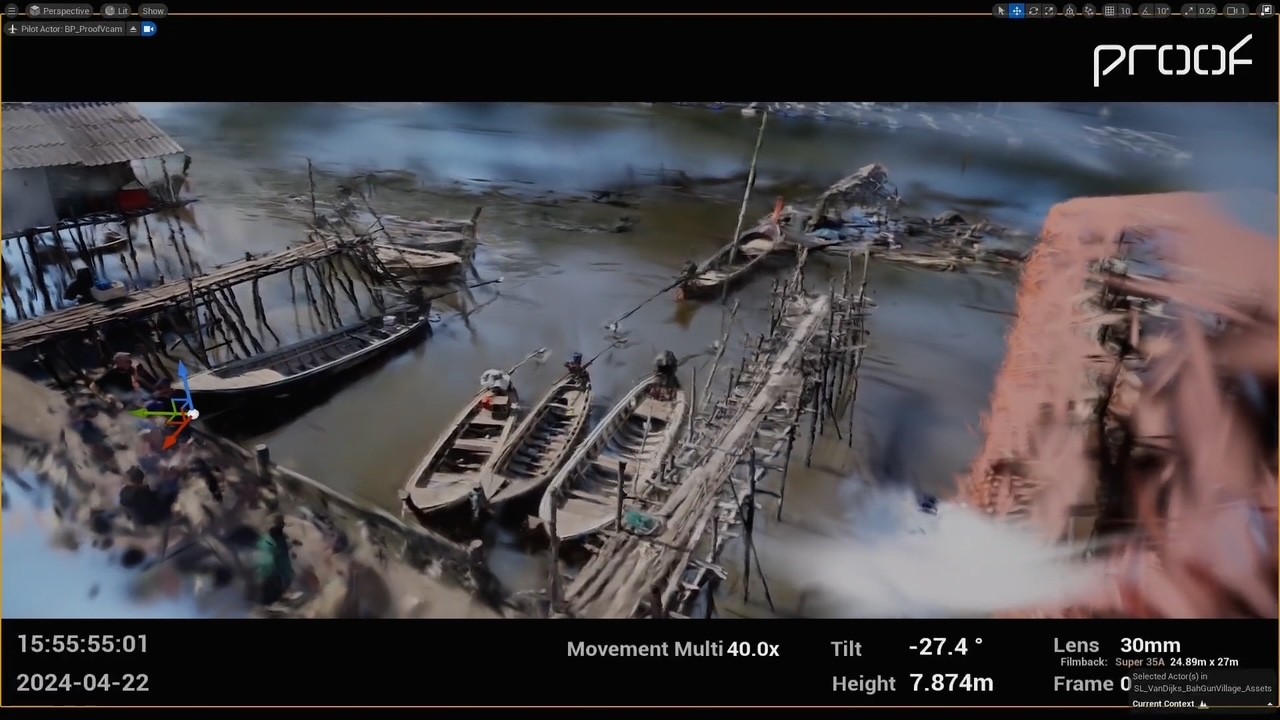
One sequence in particular illustrated this shift. The scene involved a cliffside environment where a Quetzalcoatlus nests in a cave mouth designed by the production department. Proof brought the splatted environment into Unreal and introduced the cave mouth model. They could slide it up and down the cliff, adjust scale, pose a creature model, and let Edwards explore the space. What does it look like from here? What happens if we approach from this direction? What would a helicopter angle feel like? How might a drone unit capture it?
Fulker described recording Edwards’ VCAM sessions and using them as a form of techvis. Material that could be handed to camera teams or units with a shared understanding of what the director expected to capture. Edwards felt confident enough to invite production design, and at times even stunts, into that same space. Fulker was clear that VCAM workflows collapse if there is meaningful latency. Lag is physically uncomfortable and creatively disruptive. Traditional visualization can tolerate heavier rendering because the goal is review. With splats, the goal is embodied exploration. You hold a camera, move naturally, and feel present in the scene.
Gaussian splats are one of the few reconstruction approaches that can make it feel plausible even on modest hardware. Fulker described environments that appear to have the complexity of millions of polygons, yet run comfortably in real time.
None of this is to suggest that splats solve everything. Waterfalls, rivers, wind, and other motion heavy natural phenomena remain difficult. Fast, complex dynamics break assumptions that splats rely on for stability. Yet compared to photogrammetry, radiance field based gaussian splatting handles foliage, forests, and reflective materials remarkably well. Its view-dependent effects allow scenes to respond in ways your brain expects, even when details are imperfect.
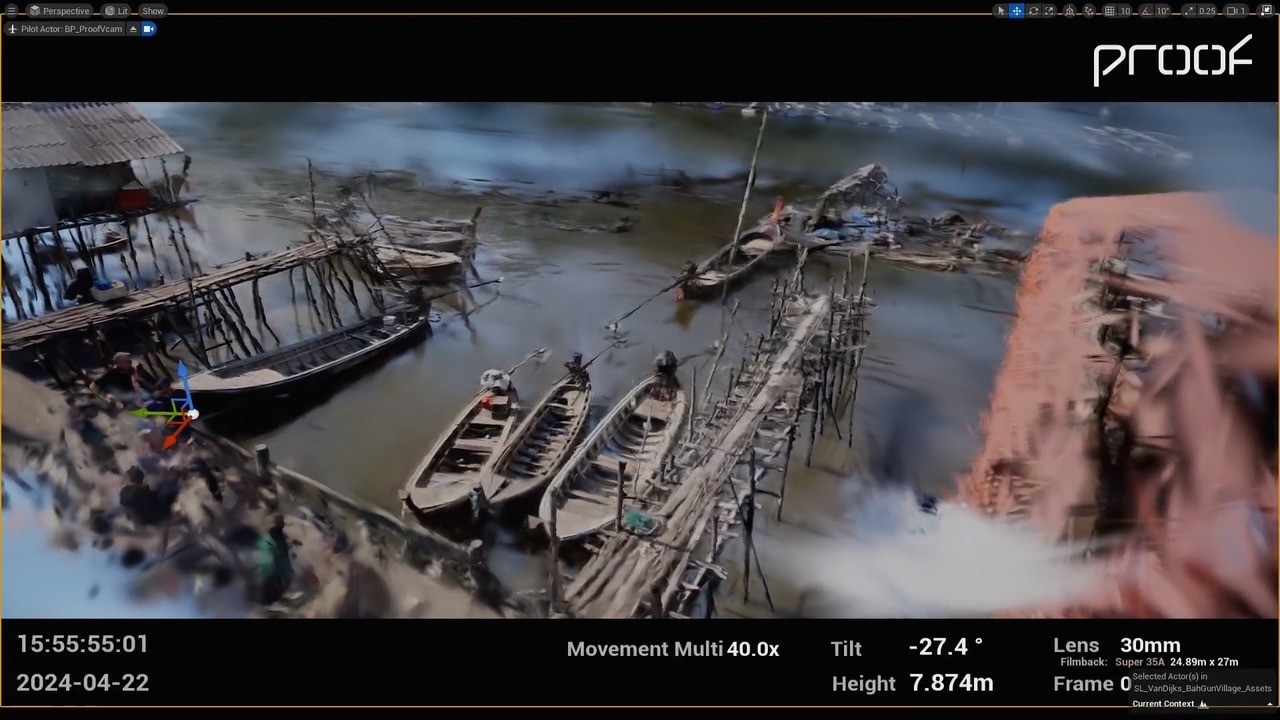
That perceptual correctness goes a long way. Traditional 3D models can achieve the same believability, but usually at much higher cost and effort. It is the same lesson now playing out in robotics and simulation.
For the use cases Proof was driving on Rebirth, the imperfections simply did not matter. The question was never whether a dinosaur’s feet perfectly intersected the ground. The question was whether the scene was plausible, whether placement and scale could be evaluated, whether camera approaches could be tested before time and money were committed to the wrong plan.
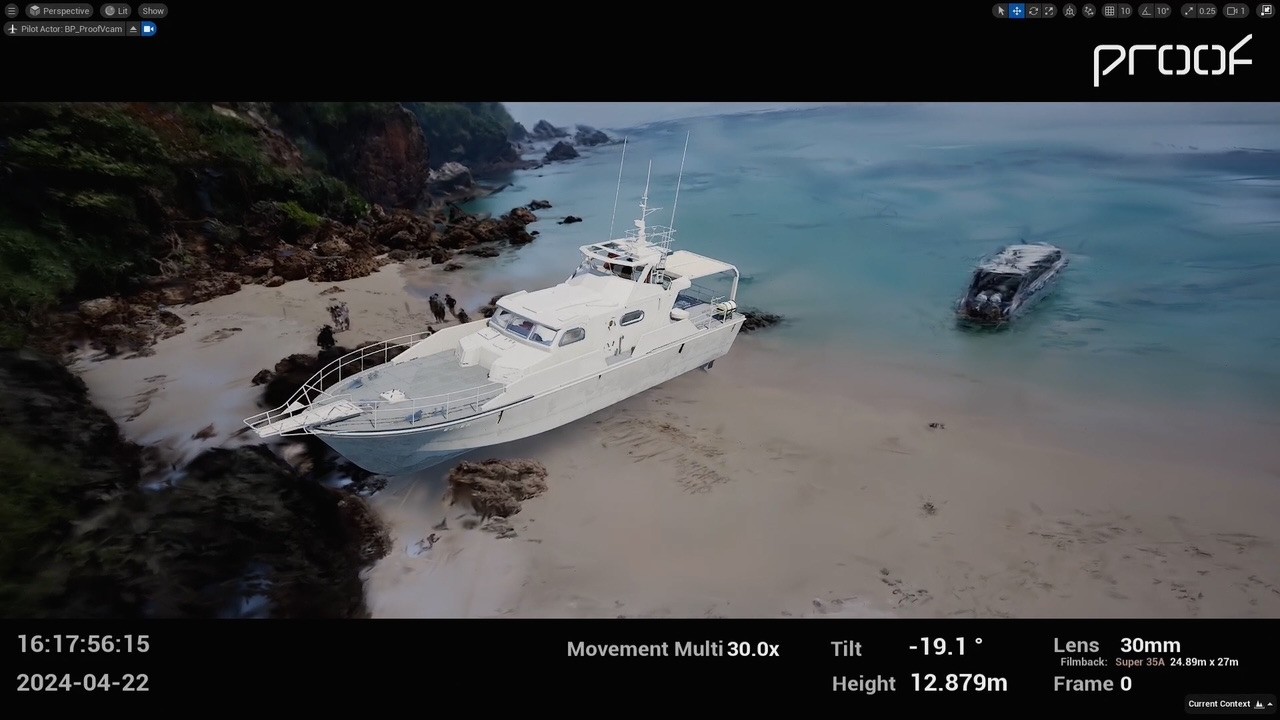
That is the precedent worth paying attention to. Proof’s experience on Jurassic World Rebirth suggests gaussian splatting is already viable as a director facing, department connecting workflow under compressed schedules, especially when the goal is to explore real locations, integrate early designs, and communicate camera intent in a format people intuitively trust.
Since that work, native gaussian splatting support has begun to appear across the software stack, including Houdini, Nuke, and OctaneRender. It is increasingly difficult to imagine a near future where this support does not deepen, or where additional industry standard tools do not follow suit.
When I asked Fulker whether splats could eventually become final pixels, he did not hesitate. In his view, the arc is familiar. What once took days becomes hours, then minutes, then interactive.
As of right now, we have yet another public example of where gaussian splatting aided a large scale production, affecting multiple departments and giving the production team more to go off prior to stepping onto set.
Not every traditional tool makes the leap from one era to the next. Some evolve. Some don’t. And some, fittingly, may end up remembered the way we remember dinosaurs. Impressive in their long time of existence, but clearly not built for what came after.