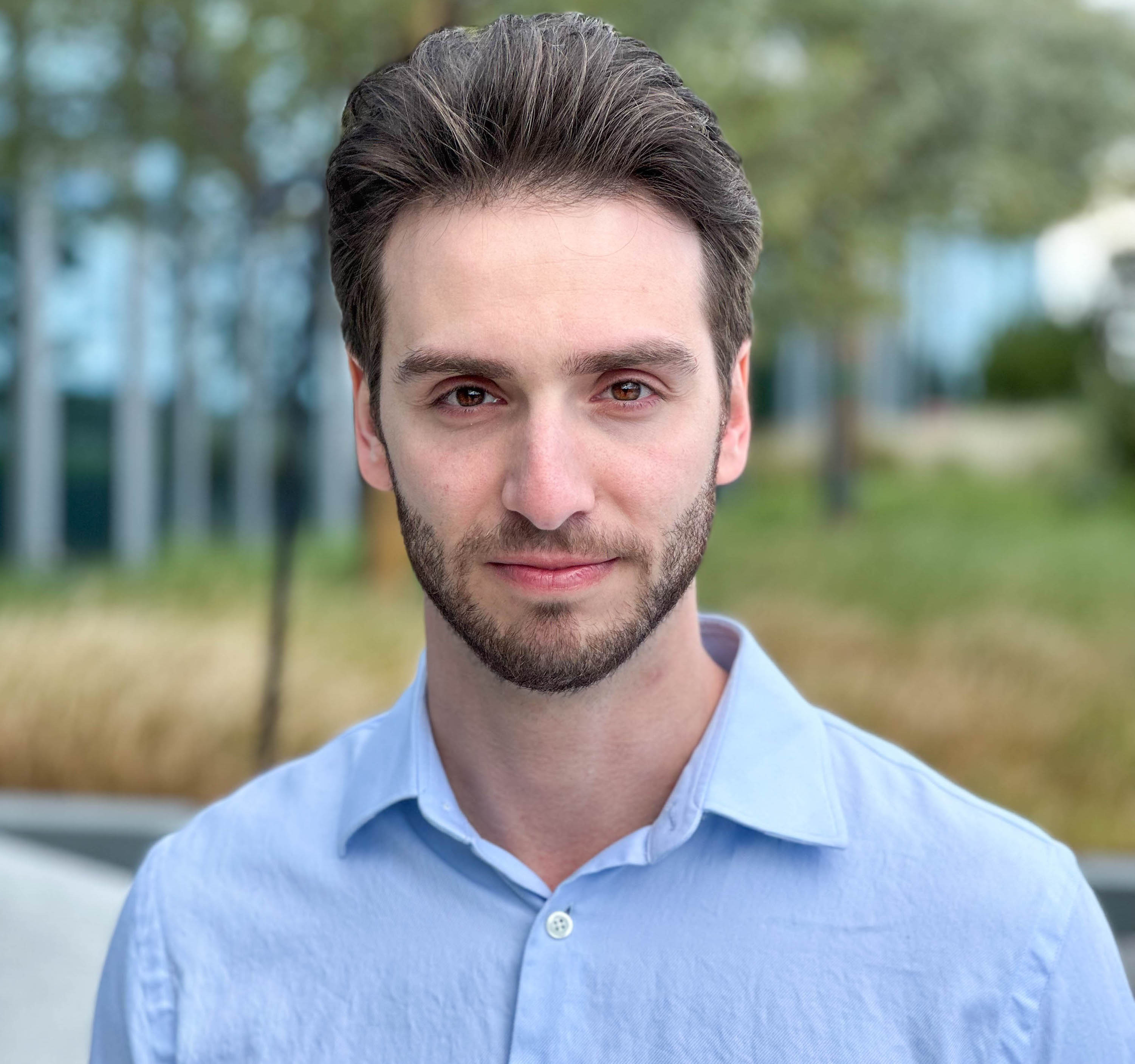
Burning Man has always been a place where art and environment collide in ways that feel otherworldly, and for 3D capture artist Josette Seitz, that collision is exactly where her work begins. As part of the virtual Burning Man team BurnerSphere, known for its detailed reconstructions of large scale sculptures and ephemeral spaces, Seitz approaches the Playa not just as a documentarian, but as a participant witnessing transformation in real time. Her captures, increasingly being done using gaussian splatting, are preserving fleeting structures, available now digitally forever. In this conversation, Seitz talks about scanning in whiteouts, learning to fly drones under desert pressure, and why Gaussian Splatting has become central to preserving the emotional atmosphere of Burning Man’s art.
The first thing a lot of people think about with burning man is the dust and sand storms. How did that affect how you captured?
Going into Burning Man the weather is always unpredictable. When scanning each sculpture or art piece I try to be as detailed as possible but move fast considering a dust storm or what is called a “whiteout” could happen at any moment. The best time to 3D scan is usually in the morning when there are less people climbing on the sculptures, but also, I typically do not encounter weather issues. It may be excruciating hot in the morning, but it’s worth the scan.
Were you shooting with a specific vision or story in mind, or were you more focused on experimentation and discovery?
I love to explore and research what art pieces will be on the Playa before heading to Burning Man. It gives me time to understand the scale of each piece, prepare the right equipment, and coordinate with the BurnerSphere team so there are fewer surprises when it’s time to scan.
What kind of setup were you using for your captures — camera rigs, drones, or handheld devices?
Since time is of the essence, I usually 3D scan with a 4K camera mounted to a stable gimbal on a 3-meter pole. Shooting continuous video instead of individual photos lets me move quickly, especially as the sun shifts and shadows will change. After a few years of overheating in the sun, I finally pushed myself to learn how to fly drones. The hardest part used to be capturing the top of the sculptures, and drones make that effortless — without the added heat and strain.
Becoming a drone operator has completely changed how I scan, especially when working with massive installations. What surprises me most is how emotional it feels. Viewing these art pieces from above gives you a perspective we rarely get to see on the ground. It’s not just a technical advantage, it deepens the relationship with the art itself. From the air, the sculptures tell a different story, and being able to capture that is something I feel genuinely honored to do.
How did you handle data management in such a harsh environment?
Having extra cameras, SD cards, and even drones is the key to making sure all the right data is captured. Once an SD card is full, I store it safely at my camp so nothing gets damaged or lost. I review footage whenever I have downtime to confirm the scan is solid, and if I spot an issue, I’ll return and rescan before I lose the chance.
Burning Man is such an ephemeral space. Everything gets built, lived in, and then disappears. How does that theme of impermanence intersect with your decision to reconstruct it digitally?
As a Burner, I love the idea that these art pieces are temporary; they force you to be present. But as a 3D scanner, I love that I can extend their life just a little longer and let them exist in new environments like Virtual Reality. I don’t capture them to replace the physical experience; I capture them so people who never got the chance to be there can still feel connected to that moment. The digital version becomes a shared memory or, for someone who couldn’t attend because of health, finances, or accessibility, it becomes a brand-new experience of their own.
Some installations, like the Temple, are created specifically to be burned. Once they’re gone, they live only in our hearts. But now, with digital reconstruction, the artwork isn’t lost completely. The lead artist, the builders, the wider community, anyone can revisit it again. Not to escape impermanence, but to honor what existed, what was felt, and what the desert transformed.
How does Gaussian Splatting change the way you think about preserving or reimagining large-scale cultural events like this?
Gaussian Splatting has already made an impact on real estate and film, but I’ve always believed it’s most powerful within art. Unlike traditional photogrammetry, splatting doesn’t just capture geometry, it captures light, texture, atmosphere, and the emotional tone of a space. That matters especially in large-scale cultural events like Burning Man, where the environment and the art piece are inseparable. For anyone documenting large-scale cultural events, Gaussian Splatting should be part of the conversation.
Have you considered using your splats for VR or interactive exploration, so viewers can “walk through” your version of Burning Man?
Absolutely. I’ve already been doing research and development to bring Gaussian Splats into the Unity game engine for VR. So far, my tests have been successful on PCVR headsets running on Windows, though I am still working on a solution for Android, Standalone VR. As part of the 3D scanning team with BurnerSphere, we’ve also been exploring how to integrate splats directly into the experience. It’s still early, but there’s a lot of potential — so stay tuned, this is just the beginning.
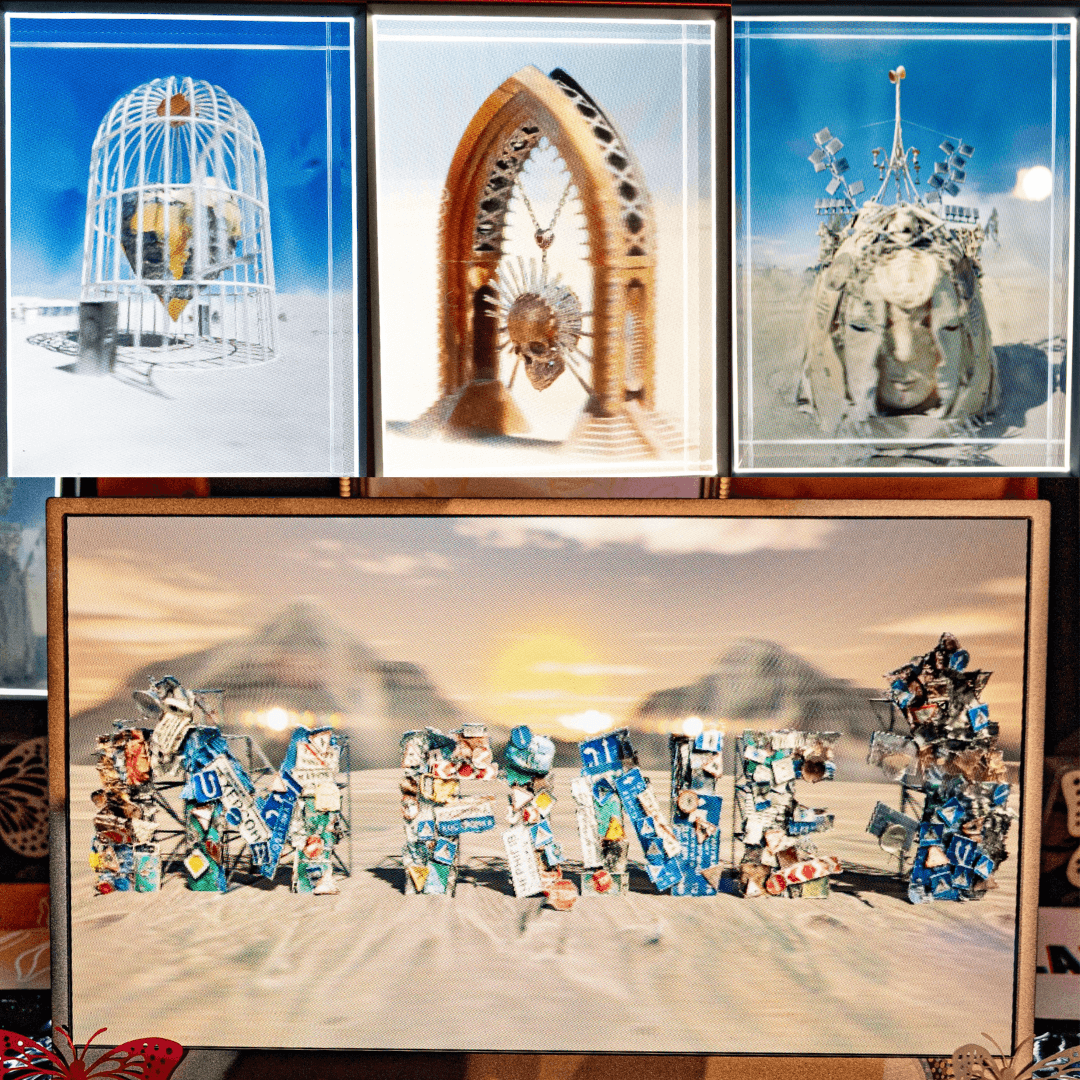
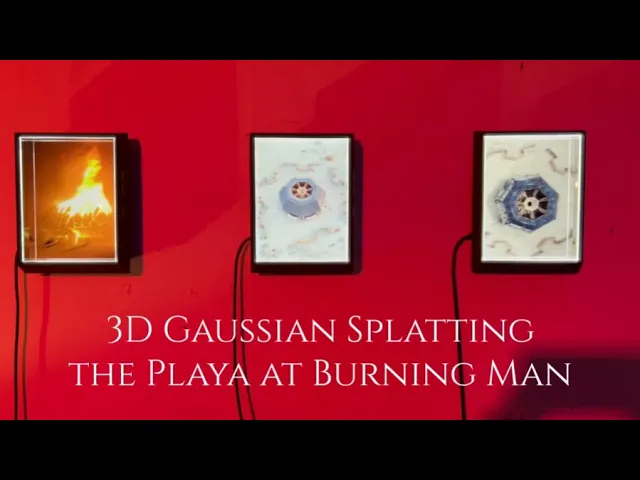
Outside of headsets, I’ve experimented with tools like Varjo Teleport and Arivval.Space to view individual scans, but my favorite results have been with Looking Glass 3D Holographic displays. Showing splats on a holographic display opens them up to a wider audience, no headset required, and it’s been incredible to watch people react to Burning Man art floating in front of them like a living memory. The response has been tremendous, and that excitement is what keeps pushing this work forward.
Was there a particular moment or scene that you’re most proud of capturing?
I tend to have a few favorites each year. Sometimes it’s because the data turned out beautifully, sometimes it’s the experience of scanning it, and sometimes it’s the connection I build with the piece or even the lead artist. This year was my first year using a drone to scan, and the pieces I captured from the air instantly became my favorites. There’s something incredible about being able to document massive sculptures from perspectives that were impossible before. It makes me proud to know I can honor them at their true scale.
I also hope that more women will step into drone operation and 3D capture. It’s powerful to be part of a field that is still growing, and I want to see more female creators taking the pilot’s seat — literally and artistically.
What was the biggest technical or creative challenge you faced?
The biggest challenge is balancing precision with speed. On the Playa, you don’t get controlled lighting, stable weather, or unlimited time. I’m racing shadows, dust storms, crowds climbing on the sculptures, and heat that overheats equipment and me. The challenge is capturing the art accurately before nature or people distort it.
Learning to scan with a drone was a huge shift. Drones solved one problem — overheating and reaching high angles, but introduced new ones: stabilization in wind, smooth flight paths, and safe flights around crowds and tall structures. It forced me to become both a pilot and a scanner at the same time. That dual skill set has been one of the hardest but most rewarding things I’ve learned.
Do you have any projects with gaussian splatting coming up?
I’ve had the chance to demo and exhibit these splats at events like San Francisco Decompression and Burnal Equinox, gatherings where the community reconnects before and after Burning Man. My favorite part is watching people point at a sculpture and immediately share a story, a memory, or an emotion tied to it. That reaction is exactly why Gaussian Splatting matters. It doesn’t just preserve the art; it brings people back to the moment and brings them together.
Because the holographic displays have been so successful in sparking connection and conversation, I plan to continue incorporating Gaussian Splatting into future art events throughout the Bay Area and beyond.
Do you think we’re heading toward a future where events like Burning Man are routinely captured as living, explorable worlds?
Yes, I do. We’re moving toward a future where cultural events aren’t just documented; they’re preserved as living worlds people can explore long after they’re gone. Tools like Gaussian Splatting, drones, etc. are making it possible to capture entire environments quickly and with emotional accuracy. It won’t replace the physical experience, but it will extend it, invite new audiences in, and turn moments into shared, explorable history.
What becomes clear after speaking with Josette Seitz is that her work is helping to document and carry forward moments in time that would otherwise disappear. Through the lifelike 3D created, it expands the ways we remember and re enter spaces long after the dust settles. You can follow her work either through Instagram, josetteseitz.com, or her LinkedIn. To experience BurnerSphere, join BurnerSphere.com/join today.