

Niantic Spatial has added USDZ export to Scaniverse, giving robotics developers another direct path from a 360 degree video capture to a simulation ready environment for NVIDIA Isaac Sim and Isaac Lab. Niantic Spatial computes the mesh depth from the splat itself, using its depth model, one of what it describes as the real world foundational models for physical AI it is building, so the geometry inherits the splat’s fidelity and yields smoother, truer surfaces than a standalone geometry scan would produce, without the roughness that typically plagues reconstructed meshes.
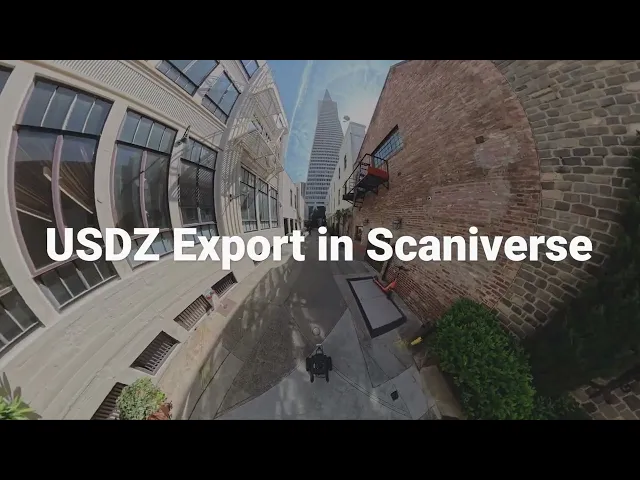
For readers who have followed Scaniverse, this extends a format and interchange lineage rather than starting a new one. The app is already the platform where Niantic Spatial developed and open sourced the SPZ compression format for 3DGS and later shipped SPZ v4.0, and the free mobile capture app has consistently been about getting splats out to where other tools can use them. USDZ pushes that interchange work into the robotics simulation stack, and it lands amid a fast growing movement of splats into that stack. NVIDIA’s Isaac Sim 6.0 shipped with NuRec support and ovrtx added Gaussian splat support.
The workflow Niantic Spatial describes is a real to sim to real loop rendered as three steps. First capturing a real environment with an inexpensive, fast 360 camera, upload to Scaniverse web, which reconstructs a high fidelity Gaussian splat, derives an aligned mesh directly from that splat with mesh depth computed from the splat for smoother surfaces, and packages the splat and mesh together as a USDZ, then import that USDZ directly into NVIDIA Isaac Sim or Isaac Lab and begin training. Sample USDZ scenes are downloadable via a form.