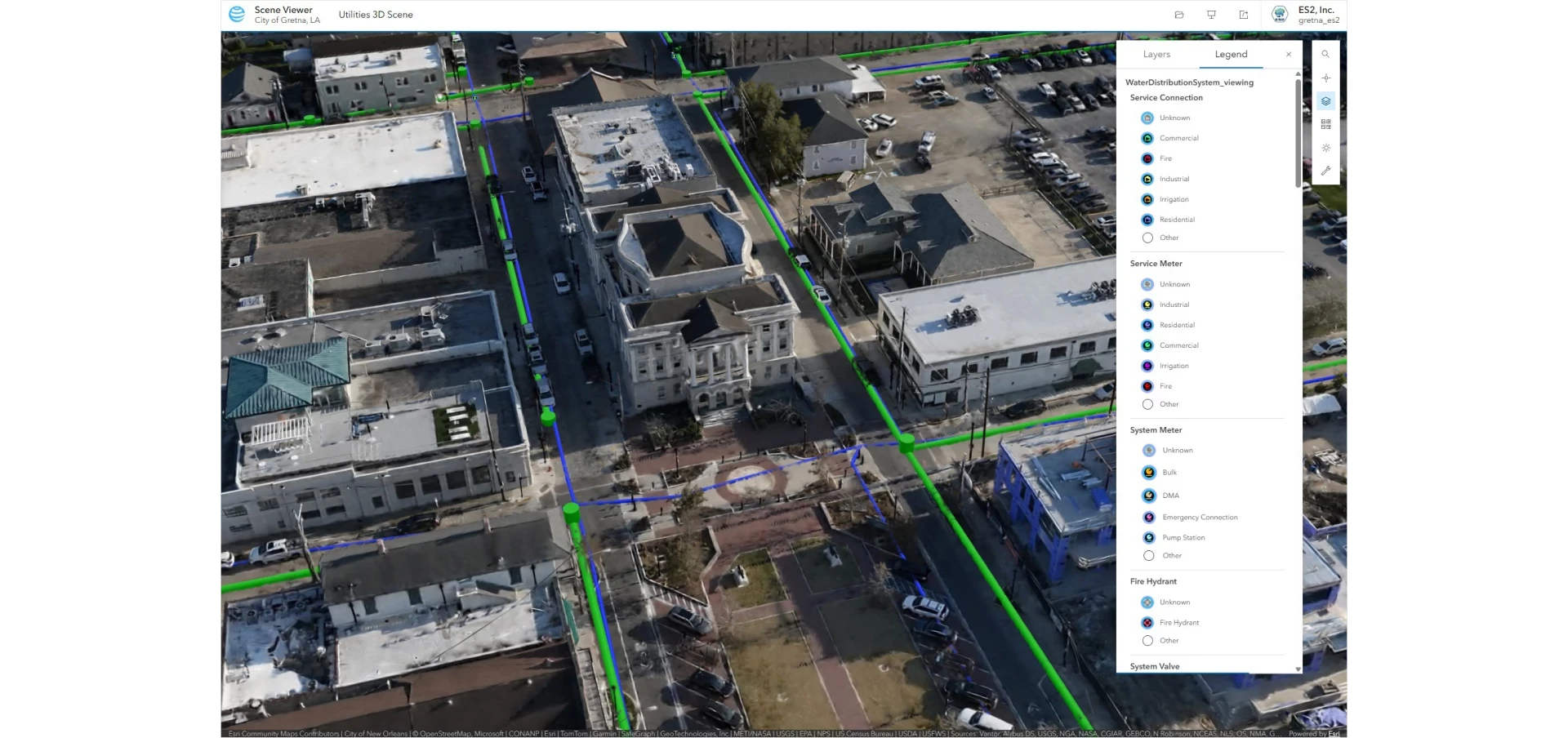

aiMotive has demonstrated dynamic relighting of gaussian splatting and is bringing the capability to aiSim 6, the next generation of its automotive simulator, through an internal technique it calls “PBR splatting” that lets a user pick any time of day, add artificial lights to a captured scene, and have a physically based engine compute the resulting illumination directly on the splats. 3DGS reconstructions traditionally store color baked into each splat rather than physically based materials, so it captures the world exactly as it was lit at capture time and cannot be relit the way a PBR asset can.
aiMotive’s approach decouples appearance from lighting so that a scene reconstructed once under one set of conditions can be driven to arbitrary lighting states, and does so without retraining the reconstruction. In the aiSim Developer Client the company shows a single captured 3DGS scene of Budapest rendered under sunny daytime, sunset, and full nighttime from the same reconstruction, alongside a color graded aiSim vehicle model composited into a scene in Sunnyvale, California.
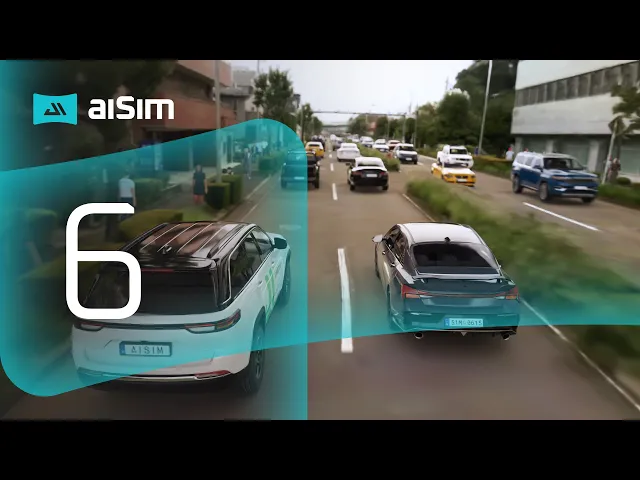
aiMotive is aiming at synthetic night time validation of driver assistance features that only make sense in the dark. Relit Gaussian scenes let a test harness exercise intelligent headlight behavior, High-Beam Assist and adaptive matrix headlights, against realistic vehicle light profiles rather than against a scene frozen at its captured exposure. That builds on aiSim’s existing light tooling. Isolux light distribution visualization with adjustable line width and lux level arrived in aiSim 5.9, with grid visualization planned for aiSim 5.10, and the aiSim 6 generation adds vehicle light simulation with per-vehicle light profiles to drive those matrix headlight and high beam scenarios.
The environments being relit come from aiMotive’s radiance field stack, which is the reason there are real captured digital twins to relight in the first place. World Extractor generates splats from recorded video and LiDAR, and aiMotive reports a portfolio spanning more than 250 km and over 50 maps across the United States, Japan, and Europe. Underneath sits the method aiMotive published as NeRF2GS, a hybrid rendering pipeline in which a LiDAR depth regularized NeRF acts as a teacher that is distilled into a Gaussian Splatting student, with static neural geometry composited against mesh based dynamic actors.
Around this the aiSim 6 generation, which aiMotive unveiled at CES 2026 and positions as “Designed for Physical AI” atop what it calls the world’s first ISO 26262 ASIL-D certified automotive simulator, adds AI based scenario modelling that turns text prompts into OpenSCENARIO files and Navier-Stokes-based particle simulation for effects such as leaf turbulence, rain spray, and manhole steam.
The AV sim radiance field thread already runs through Applied Intuition’s Neural Sim, NVIDIA’s Isaac Sim 6.0 and its NuRec, and Third Dimension’s SuperSim, all of which turn captured reality into drivable scenes.
aiMotive presents PBR splatting relighting arriving with the aiSim 6 generation, but it points at a near term future where a gaussian splatting is a lighting agnostic asset rather than a fixed snapshot of the day it was recorded. Learn more here.