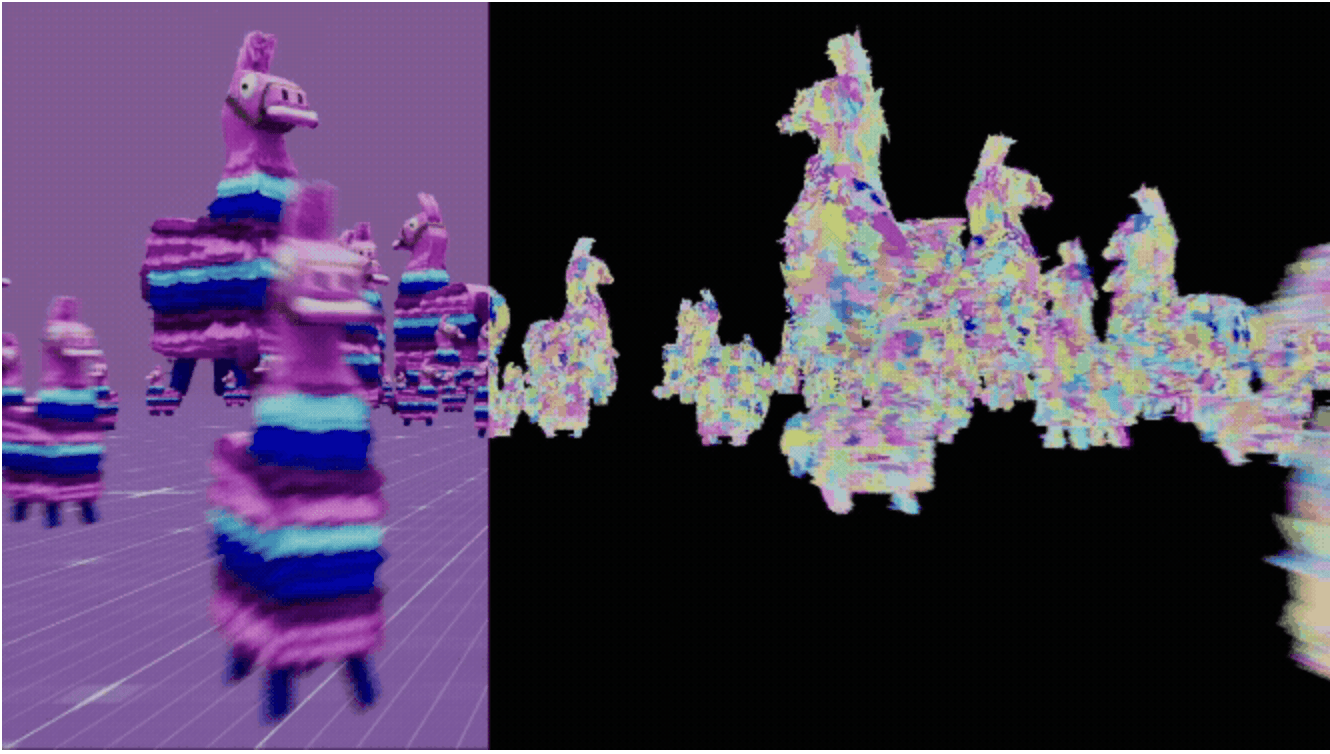
If you’ve ever tried loading a large gaussian splatting scene into Unreal Engine, you know the pain. Millions of splats, each needing to be sorted and rendered, can bring even capable GPUs to their knees. NanoGS, a new free plugin from VFX artist and technical director Tim Chen, takes a page from Epic’s own Nanite playbook.
NanoGS, short for Nano Gaussian Splatting, applies LoD clustering and culling strategies inspired by Unreal Engine’s Nanite geometry virtualization system. The plugin automatically breaks gaussian splatting scenes into hierarchical LOD clusters, uses screen space error metrics to select the appropriate detail level, and draws only the splats actually needed for the current camera view.
NanoGS employs splat compaction to eliminate redundant data, a global accumulator for efficient blending, and a GPU-accelerated Radix Sort for the depth ordering that gaussian splatting demands. The optimizations deliver more than a 4x improvement in viewport frame rates in demo scenes, tested on an NVIDIA GeForce RTX 2070, not exactly a top-tier card by 2026 standards.
As Lead Technical Artist at Moonshine Studio, a VFX and animation firm, Chen’s built internal tools for gaussian splatting editing and visualization. The Unreal Engine gaussian splatting ecosystem has been heating up steadily. We’ve previously covered plugins like the XScene plugin and Volinga‘s relightable gaussian splatting tools. NanoGS carves out its own niche by focusing squarely on rendering performance at scale, borrowing concepts from the engine’s own geometry pipeline rather than treating gaussian splatting as a completely separate rendering path.
NanoGS 1.0 is compatible with Unreal Engine 5.6 and above, and Chen describes this initial release as primarily a proof of concept, meaning there’s likely more to come. The plugin is a free download from GitHub with a MIT License.
Check out NanoGS on GitHub.