

NVIDIA has just released vkSplatting 2026.1 and it didn't waste any time, appearing in NVIDIA CEO, Jensen Huang's GTC keynote.
vkSplatting has been an important reference implementations for gaussian splatting on Vulkan. It’s where users can experiment with rasterization, ray tracing, and hybrid radiance field approaches all in one place. But with this release, the repository is starting to move beyond being just a testbed.
A big part of that comes from how scenes are now structured. The introduction of a multi-instance splat set architecture means you’re no longer dealing with a single flattened splat dataset. Instead, splats can be instanced, indexed, and reused across a scene with global index tables and unified sorting.
Alongside that, there’s now a centralized bindless asset system with a root scene buffer. It removes a lot of the traditional constraints around resource binding.
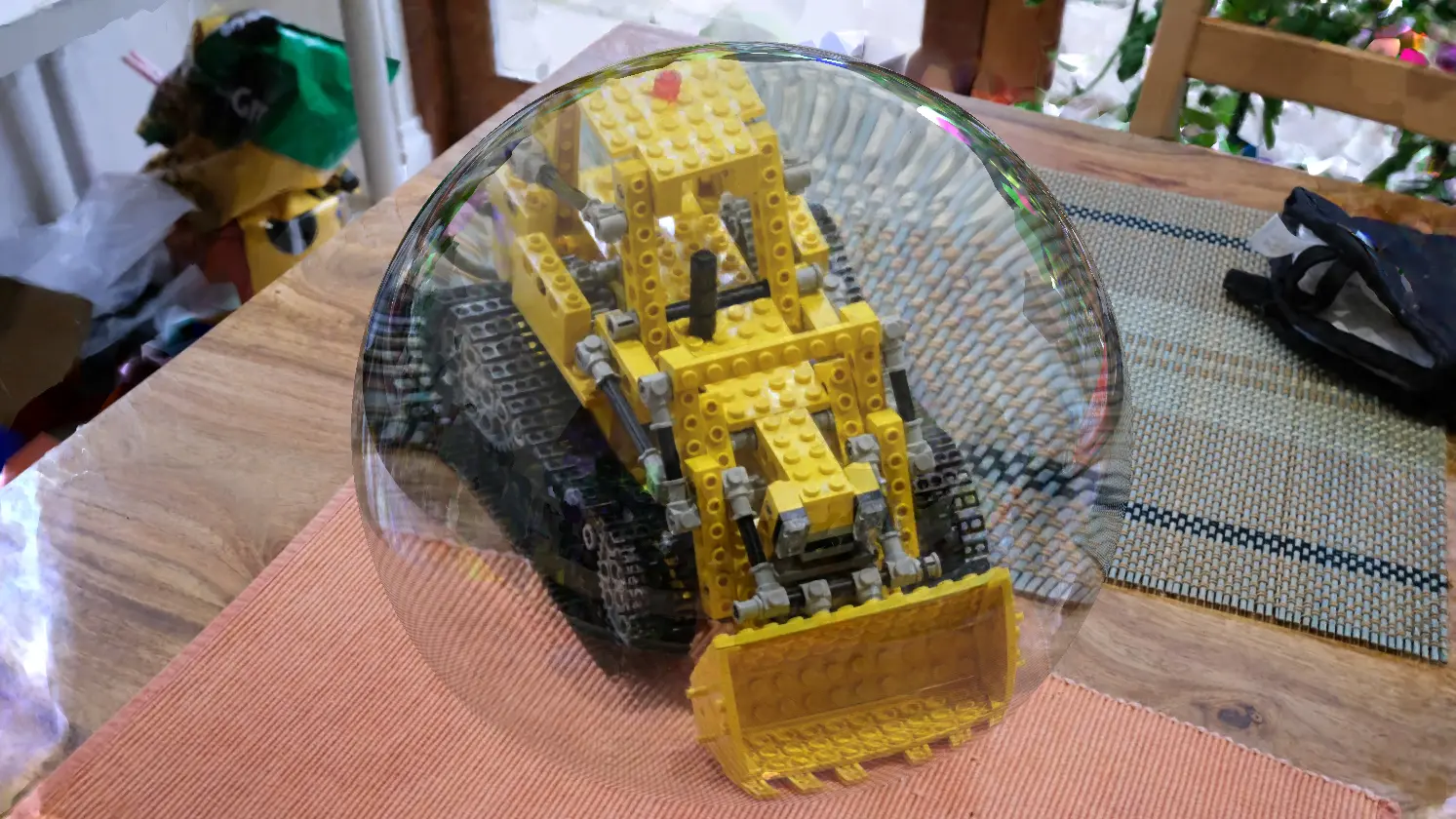
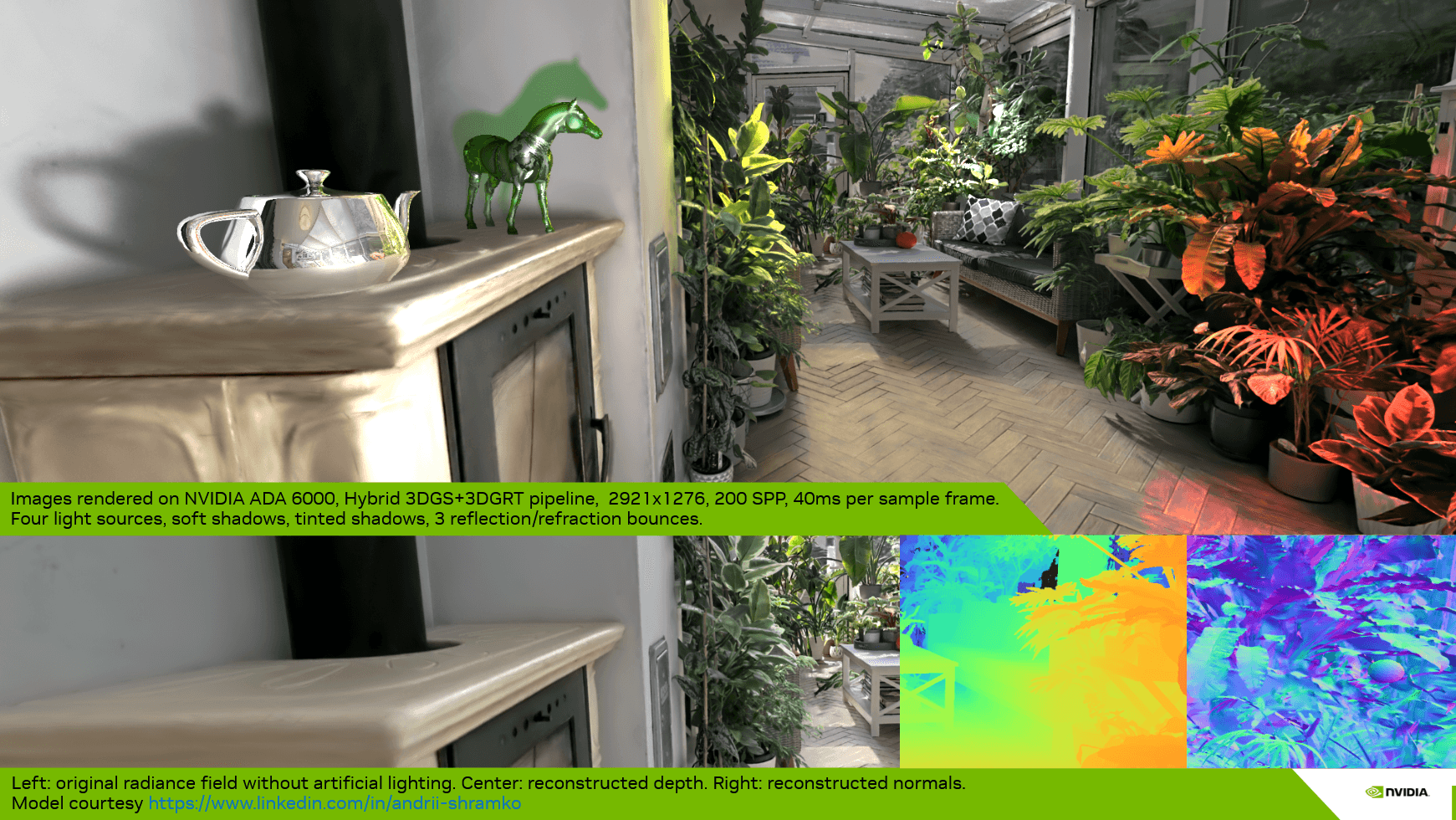
This release also adds a proper multi-light setup, supporting point, spot, and directional lights, with ray traced hard and soft shadows. At the same time, vkSplatting is moving toward more standard rendering techniques with front to back rasterization and depth consolidation, plus deferred shading for splats. The renderer now builds GPU-driven acceleration structures with multi-TLAS and BLAS chunking, and it includes VRAM budget checks before allocation.
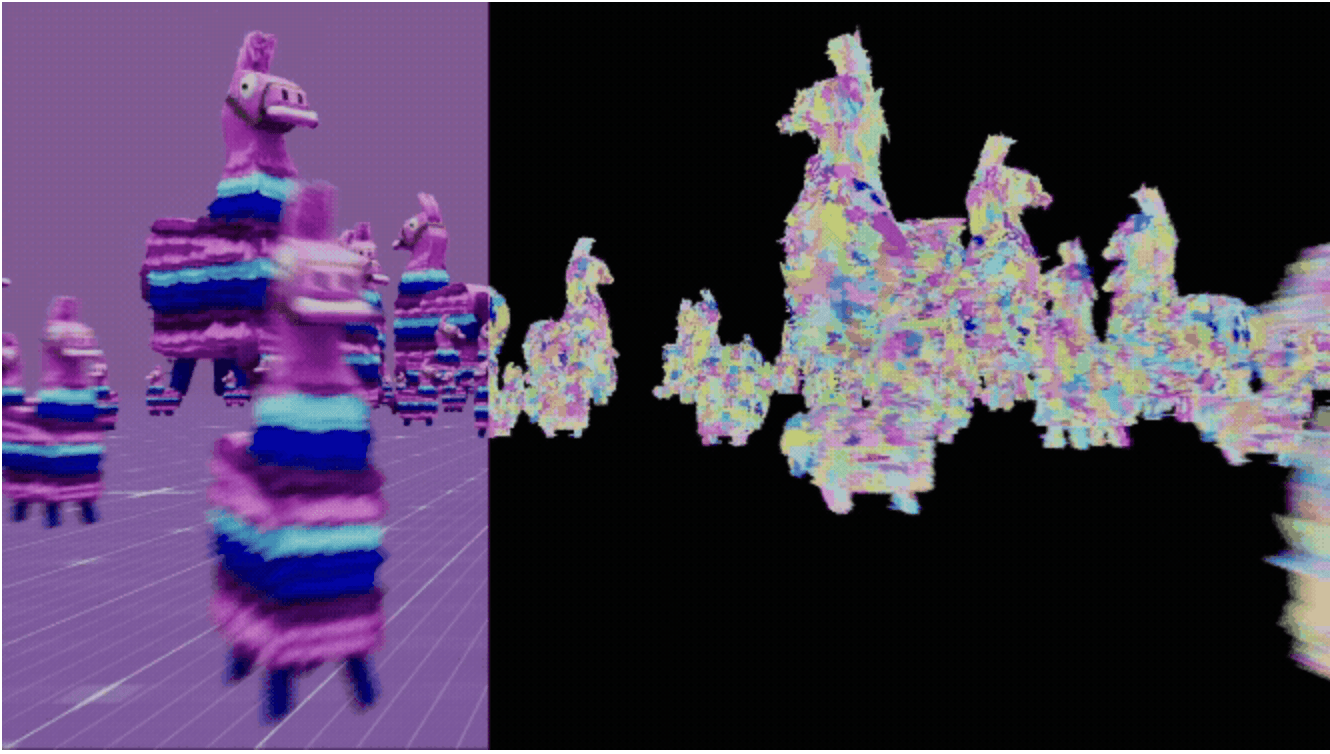
The addition of stochastic splat sorting and a Monte Carlo tracing strategy leans into probabilistic rendering to keep things responsive. It also pairs with a DLSS Ray Reconstruction, which handles anti-aliasing, upscaling, and denoising. This update expands visualization modes across both ray tracing and hybrid pipelines, exposing things like normals, depth, DLSS buffers, and even splat IDs.
There are new overlays for scene summaries, shader feedback, and ray hit profiling, along with an editing mode, transform tools, and an infinite grid. One nice addition is a built-in image comparison tool with MSE, PSNR, and FLIP metrics.
vk_splatting remains open sourced and Apache 2.0 licensed.