
OpenQuestCapture for Quest 3 and 3S Capture

Michael Rubloff

Michael Rubloff

Email
Copy Link
Twitter
Linkedin
Reddit
Whatsapp
OpenQuestCapture

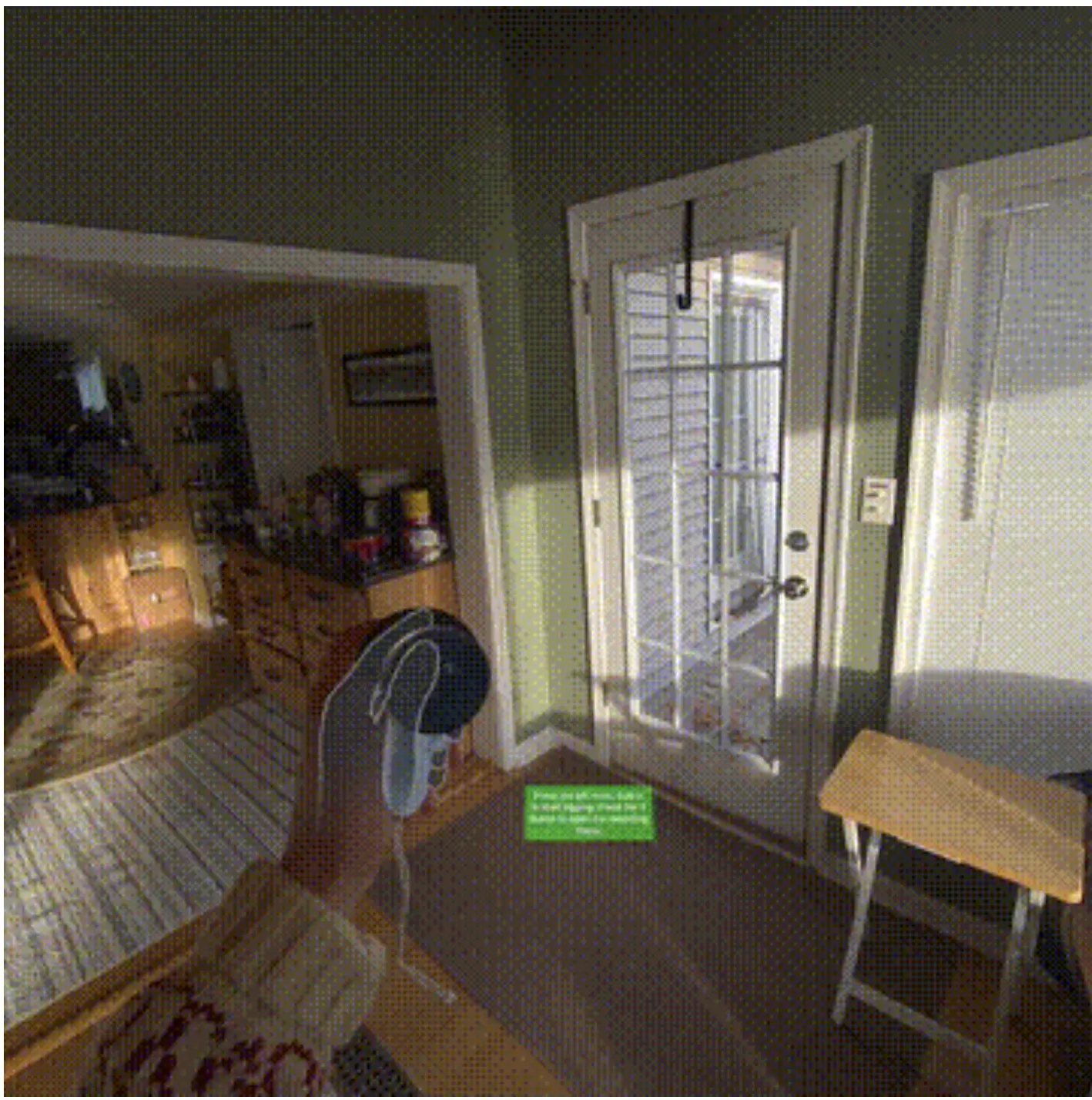
OpenQuestCapture is a new open source project that pushes the Meta Quest 3 and 3S closer to a surprisingly potent capture device. Built as a Unity application and released under an MIT license, the repository allows users to directly capture from the headset.

With the surge in popularity of Meta’s Hyperscape Capture, there has been a growing awareness, and demand, for capturing directly with a headset. Unfortunately, Meta does not currently offer a way to export either raw capture data or trained PLY files. What it does allow is the creation of shareable links, enabling up to eight people to join a space simultaneously, but the underlying data remains locked away.

OpenQuestCapture fills that gap by capturing headset and controller poses, stereo passthrough imagery, camera intrinsics, and raw depth maps, all aligned in time and organized into session based logs. The project exposes the full capture pipeline, from Camera2 API characteristics to raw YUV frames and per camera depth descriptors.

Similar to Hyperscape Capture, OpenQuestCapture also gives real time visualization inside the headset. As users scan an environment, they can see coverage feedback rendered live, with color indicating the angle of capture. White for head on views and increasingly vivid colors for grazing angles.

The project is also paired with a companion repository, Meta Quest 3D Reconstruction, which handles parsing, decoding, and reconstruction of the captured data. Together, the two projects form a complete pipeline that converts raw Quest logs into COLMAP compatible outputs using Open3D and Python utilities. From there, scenes can be passed directly into Gaussian Splatting workflows, like Postshot or Lichfeld Studio.

OpenQuestCapture is built on top of the Quest sensor data capture foundations laid by QuestRealityCapture, created by t-34400. The author explicitly credits that work for making Quest sensor access feasible in the first place. The app is sideloaded onto the Quest, and you will need to enable permissions for headset cameras, and recording is toggled using the left controller’s menu button.

Sessions are automatically stored in timestamped folders on internal storage, with options to export recordings as zip files directly from within the headset. For those who want a fully managed path, captured data can be uploaded to vid2scene’s cloud service, which handles reconstruction and produces a 3D Gaussian Splatting scene without local setup.

The project is still early, with only a handful of contributors and modest GitHub traction so far, but its the latest foray into capturing directly with a Quest. Just a few months ago, it was hard to imagine anyone using their headset to be capturing gaussian splatting data with, but it’s being rapidly proven that the headset form factor is a compelling capture device.

Learn more and access OpenQuestCapture through their GitHub repo!

Featured

Recents

Platforms

Scaniverse #SplatYourWorld Challenge Winners Announced

Niantic Spatial names the first Scaniverse #SplatYourWorld Challenge winners, with Hiroto Otsubo's Insta360 X5 capture of Salar de Uyuni taking the Grand Prize.

Michael Rubloff

Aug 12, 2026

Platforms

Scaniverse #SplatYourWorld Challenge Winners Announced

Niantic Spatial names the first Scaniverse #SplatYourWorld Challenge winners, with Hiroto Otsubo's Insta360 X5 capture of Salar de Uyuni taking the Grand Prize.

Michael Rubloff

Platforms

Rerun Adds an Experimental Gaussian Splat Archetype and EWA Renderer in 0.36.0

Rerun 0.36 adds an experimental GaussianSplats3D archetype and an EWA splat renderer, loading Gaussian splat PLY files directly in the Viewer or from the SDK.

Michael Rubloff

Aug 12, 2026

Platforms

Rerun Adds an Experimental Gaussian Splat Archetype and EWA Renderer in 0.36.0

Rerun 0.36 adds an experimental GaussianSplats3D archetype and an EWA splat renderer, loading Gaussian splat PLY files directly in the Viewer or from the SDK.

Michael Rubloff

Platforms

XGRIDS Adds a Gaussian Splat Format Converter to LCC Studio V2.3.0

XGRIDS LCC Studio V2.3.0 adds a Converter for moving 3DGS data between formats and out to 3D Tiles and USD, and LCC Model Editor V1.2.0 gains a Mip Filter.

Michael Rubloff

Aug 12, 2026

Platforms

XGRIDS Adds a Gaussian Splat Format Converter to LCC Studio V2.3.0

XGRIDS LCC Studio V2.3.0 adds a Converter for moving 3DGS data between formats and out to 3D Tiles and USD, and LCC Model Editor V1.2.0 gains a Mip Filter.

Michael Rubloff

Platforms

Insta360 Brings Gaussian Splatting to the X6 With Spatial Capture

Insta360 X6 adds Spatial Capture, turning 360 captures into 3D Gaussian splatting models through cloud processing.

Michael Rubloff

Aug 12, 2026

Platforms

Insta360 Brings Gaussian Splatting to the X6 With Spatial Capture

Insta360 X6 adds Spatial Capture, turning 360 captures into 3D Gaussian splatting models through cloud processing.

Michael Rubloff

Trending Articles
  1. TRENDING
    Loading...
  2. TRENDING
    Loading...
  3. TRENDING
    Loading...
Michael Rubloff

Written by Michael Rubloff

Michael is the Founder and Managing Editor of Radiancefields.com

Email
Copy Link
Twitter
Linkedin
Reddit
Whatsapp

More from Michael Rubloff

More from Michael Rubloff

Platforms

Scaniverse #SplatYourWorld Challenge Winners Announced

Niantic Spatial names the first Scaniverse #SplatYourWorld Challenge winners, with Hiroto Otsubo's Insta360 X5 capture of Salar de Uyuni taking the Grand Prize.

Michael Rubloff

Aug 12, 2026

Niantic Spatial

Platforms

Scaniverse #SplatYourWorld Challenge Winners Announced

Michael Rubloff

Aug 12, 2026

Niantic Spatial

Platforms

Scaniverse #SplatYourWorld Challenge Winners Announced

Niantic Spatial names the first Scaniverse #SplatYourWorld Challenge winners, with Hiroto Otsubo's Insta360 X5 capture of Salar de Uyuni taking the Grand Prize.

Michael Rubloff

Aug 12, 2026

Niantic Spatial

Platforms

Rerun Adds an Experimental Gaussian Splat Archetype and EWA Renderer in 0.36.0

Rerun 0.36 adds an experimental GaussianSplats3D archetype and an EWA splat renderer, loading Gaussian splat PLY files directly in the Viewer or from the SDK.

Michael Rubloff

Aug 12, 2026

Rerun

Platforms

Rerun Adds an Experimental Gaussian Splat Archetype and EWA Renderer in 0.36.0

Michael Rubloff

Aug 12, 2026

Rerun

Platforms

Rerun Adds an Experimental Gaussian Splat Archetype and EWA Renderer in 0.36.0

Rerun 0.36 adds an experimental GaussianSplats3D archetype and an EWA splat renderer, loading Gaussian splat PLY files directly in the Viewer or from the SDK.

Michael Rubloff

Aug 12, 2026

Rerun

Platforms

XGRIDS Adds a Gaussian Splat Format Converter to LCC Studio V2.3.0

XGRIDS LCC Studio V2.3.0 adds a Converter for moving 3DGS data between formats and out to 3D Tiles and USD, and LCC Model Editor V1.2.0 gains a Mip Filter.

Michael Rubloff

Aug 12, 2026

LCC Studio

Platforms

XGRIDS Adds a Gaussian Splat Format Converter to LCC Studio V2.3.0

Michael Rubloff

Aug 12, 2026

LCC Studio

Platforms

XGRIDS Adds a Gaussian Splat Format Converter to LCC Studio V2.3.0

XGRIDS LCC Studio V2.3.0 adds a Converter for moving 3DGS data between formats and out to 3D Tiles and USD, and LCC Model Editor V1.2.0 gains a Mip Filter.

Michael Rubloff

Aug 12, 2026

LCC Studio