Michael Rubloff
Feb 11, 2026


When OTOY released Octane 2026 late last year, the headline was that Gaussian splatting had officially entered the realm of commercial path tracing. With the release of Octane 2026.2 this week, that functionality is receiving a refinement that reinforces splats as a stable, production ready primitive inside Octane.
Several splat specific issues that surfaced after 2026.1 have now been addressed. OTOY resolved a wireframe pass hang that occurred when splats were present in a scene and corrected an issue where the splat info AOV did not render properly when depth of field was enabled. In certain cases, Gaussian splats were not rendering correctly under the PMC kernel, and some splats could appear invisible unless covariance bias was manually increased. These inconsistencies have now been fixed.
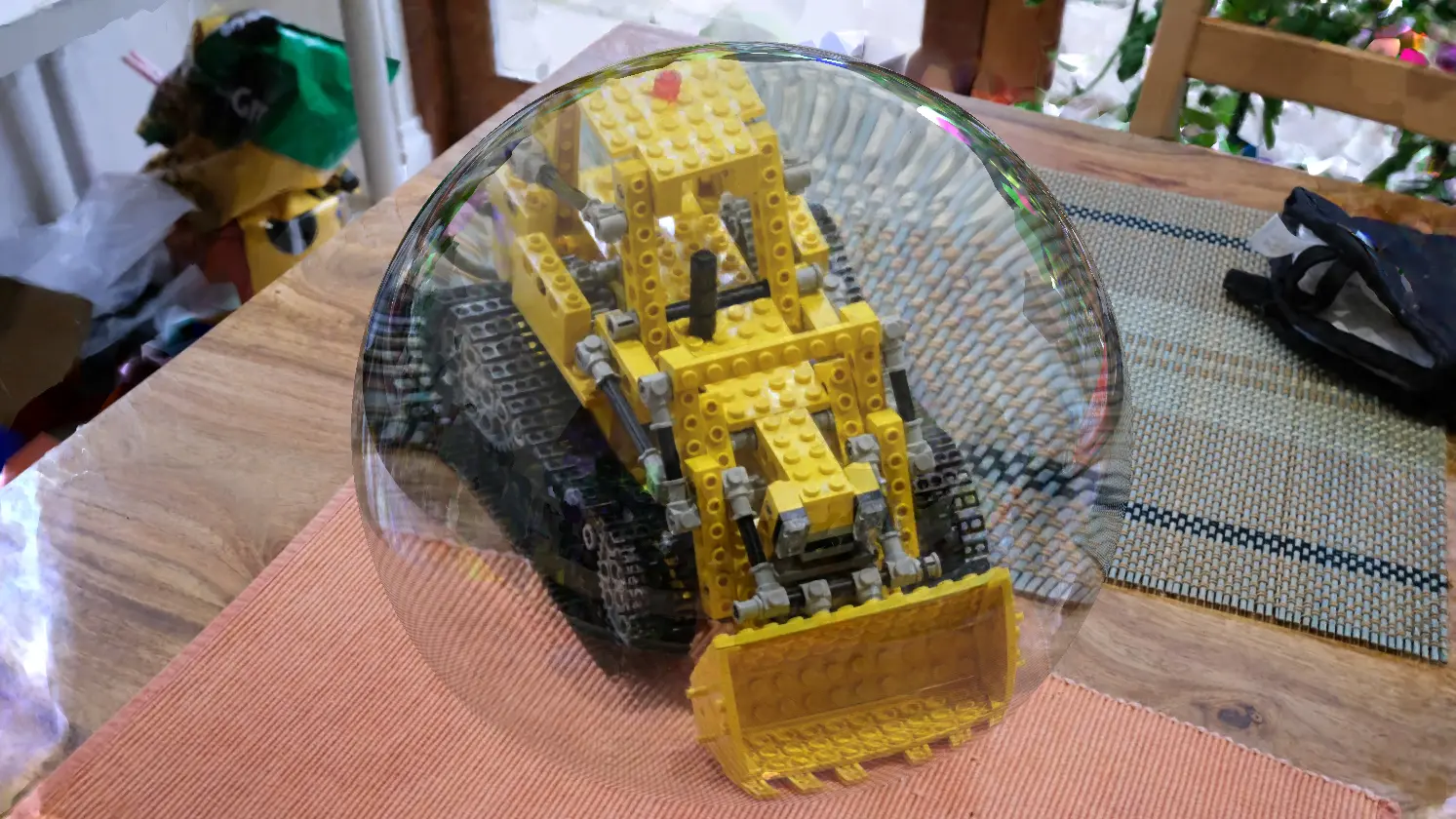
Perhaps most notably, the team addressed a light leaking issue through Gaussian splats. In Octane’s case, because splats are path traced entities rather than billboard approximations, resolving this behavior reinforces their physical correctness within the renderer. The fix introduces a compatibility mode for scenes created in 2026.1, preserving prior looks while improving accuracy going forward.
The Neural Radiance Cache also continues to evolve. Introduced in 2026 as a runtime trained neural network that accelerates indirect lighting convergence, NRC now supports the photon tracing kernel in 2026.2. That expansion increases its usefulness in scenes where indirect light transport dominates. Additionally, device memory usage for NRC is now visible inside the Preferences window.
Beyond splat specific fixes, 2026.2 strengthens the hybrid infrastructure that many radiance field workflows depend on. Network rendering has been enabled for scenes using meshlets and high quality texture displacement. Improvements to high quality texture displacement performance further reduce artifacts and VRAM strain, which is particularly relevant in scenes combining polygonal detail with splat based elements.
There are also corrections that indirectly improve splat heavy scenes, including fixes to caustics from HDRI environment maps and adjustments to brightness behavior when dispersion interacts with chromatic aberration.
Octane 2026.2 also addresses stability at a systemic level, resolving CUDA memory leaks, OptiX pipeline build instability under certain drivers, macOS rendering toggle errors, and virtual texture update inconsistencies. The update also sets minimum NVIDIA driver requirements at R535, or R572 for RTX 50 series GPUs, and macOS 14.5.
We will continue monitoring how these refinements translate into real world radiance field pipelines. Learn more at OTOY's forums.