Viverse Worlds Announced with 3DGS Support

Michael Rubloff

Michael Rubloff

Email
Copy Link
Twitter
Linkedin
Reddit
Whatsapp
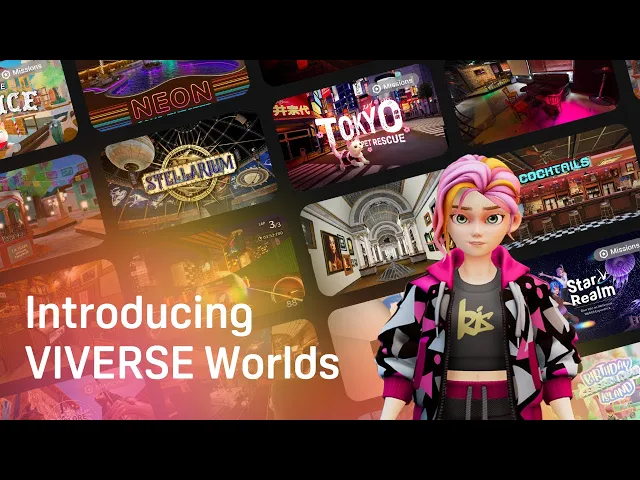
Viverse Worlds

One of the hottest trends in radiance fields at the start of this year has been the continual addition of new viewers and distribution methods. From Voluma, StorySplat, Reflct, to SuperSplat 2.0, we’re now seeing the launch of Viverse Worlds from HTC, aiming to become the YouTube of 3D.

While most of the technologies enabled by the platform may not be of great interest to readers here, one major development is its support for Gaussian Splatting, a Radiance Field representation. For those new to the site, Gaussian Splatting can take standard 2D photos or videos and reconstruct them into lifelike, interactive 3D.
Viverse is paired with PlayCanvas and its engine. Once you have your 3DGS ply, you will need to go through PlayCanvas. I highly recommend passing it through their 3DGS editor, SuperSplat, which allows you to clean up and compress your captures. Next, you’ll upload the capture into PlayCanvas’s engine, create a spawn point, add collisions, and any other functionalities you would like for users. 

Before publishing, the PlayCanvas scene must meet Viverse’s requirements:

  • Spawn Points – Define where users will appear

  • Colliders for Floors – Ensure navigation works correctly

  • No Default Lights/Cameras – Prevent conflicts with Viverse’s rendering pipeline

Viverse has a step by step tutorial on how to do all of this. There’s no max file size for Viverse Worlds, but keep in mind that other people will have to be able to open the capture on their devices, so definitely compress your captures!

Once you have completed their upload flow, you’re ready to begin sharing your capture to the world. There’s not a lot of sample capture data available on Viverse yet, but one of my favorite creators, MikkoH, has uploaded a small collection of their work. Their content is so good and suggest giving them a follow!

“Talented creators are designing impressive interactive 3D content, but it’s not easily consumed or discovered online,” said Andranik Aslanyan, Head of Growth, HTC VIVERSE.

Gaussian Splatting compression has seen major advancements since its initial release, with file sizes now 95% smaller than before. While I haven’t found a specific file size limit for Viverse, I’d recommend running captures through SuperSplat’s compression method, which significantly reduces file sizes while preserving spherical harmonic data and visual fidelity.

The launch of Viverse Worlds continues the growing trend of 3DGS viewers, reinforcing the investment in distribution, interaction, and enhanced functionality beyond just visualization.

Meanwhile, training platforms for Gaussian Splatting have remained relatively stable. Most users seem satisfied with existing options, whether it’s training locally with Postshot and Nerfstudio or opting for cloud-based solutions like Kiri Engine and Varjo’s Teleport. For those looking to train with Luma AI, it remains one of the easiest platforms to get started with, but it lacks spherical harmonic support for 3DGS exports, which captures scenes with lifelike appearance. Hopefully Luma revises this and enables the functionality, but I think it will be extremely unlikely for the Palo Alto company to do with the progress of Dream Machine and Ray2. 

HTC has been a leader in smart mobile devices and technology since its inception in 1997, and Viverse is the latest high-profile platform to support radiance field representations. There’s no word yet whether or not 3DGS support will arrive in HTC’s Viveport VR product, but it would not surprise me to see this. More companies of similar stature will likely follow suit this year. 

With Viverse’s vision of a YouTube for 3D and Miris’s recent showcase of spatial streaming, we’re seeing the world gradually transition into lifelike 3D. While it may seem like an overnight success to future observers, we can see this transformation happening right in front of us— right now.

More information about Viverse Worlds can be found on their website and people can explore the 3DGS captures under See the Real World. 

Featured

Recents

Sony Adds S-Log3 Capture and Coordinate System Export to XYN Spatial Scan v1.1.0

Sony XYN Spatial Scan v1.1.0 adds S-Log3 and S-Gamut3.Cine images as a source for 3D model generation, plus LUF and RDF coordinate-system selection on export.

Michael Rubloff

Jul 29, 2026

Sony Adds S-Log3 Capture and Coordinate System Export to XYN Spatial Scan v1.1.0

Sony XYN Spatial Scan v1.1.0 adds S-Log3 and S-Gamut3.Cine images as a source for 3D model generation, plus LUF and RDF coordinate-system selection on export.

Michael Rubloff

Platforms

PlayCanvas Adds a Three Point Grid Alignment Tool to SuperSplat 2.32

SuperSplat 2.32 adds an Orient tool that aligns a Gaussian splat to the grid from three picked points, plus a selectable grid plane and 8K render output.

Michael Rubloff

Jul 29, 2026

Platforms

PlayCanvas Adds a Three Point Grid Alignment Tool to SuperSplat 2.32

SuperSplat 2.32 adds an Orient tool that aligns a Gaussian splat to the grid from three picked points, plus a selectable grid plane and 8K render output.

Michael Rubloff

Platforms

Postshot Adds SPZ v4, SH Degree Capping, and HTML Export

Postshot 1.1.43 adds SPZ version 4 export, a quality setting, and an option to cap spherical harmonic degree at export, plus HTML export and GPS metadata.

Michael Rubloff

Jul 28, 2026

Platforms

Postshot Adds SPZ v4, SH Degree Capping, and HTML Export

Postshot 1.1.43 adds SPZ version 4 export, a quality setting, and an option to cap spherical harmonic degree at export, plus HTML export and GPS metadata.

Michael Rubloff

Platforms

DJI Terra V5.3.0 Adds Cluster Reconstruction for Gaussian Splatting

DJI Terra V5.3.0 adds cluster reconstruction for Gaussian splatting, removing the previous scale limit on 3DGS jobs and adding water-surface handling and floater removal.

Michael Rubloff

Jul 27, 2026

Platforms

DJI Terra V5.3.0 Adds Cluster Reconstruction for Gaussian Splatting

DJI Terra V5.3.0 adds cluster reconstruction for Gaussian splatting, removing the previous scale limit on 3DGS jobs and adding water-surface handling and floater removal.

Michael Rubloff

Trending Articles
  1. TRENDING
    Loading...
  2. TRENDING
    Loading...
  3. TRENDING
    Loading...
Michael Rubloff

Written by Michael Rubloff

Michael is the Founder and Managing Editor of Radiancefields.com

Email
Copy Link
Twitter
Linkedin
Reddit
Whatsapp

More from Michael Rubloff

More from Michael Rubloff

Sony Adds S-Log3 Capture and Coordinate System Export to XYN Spatial Scan v1.1.0

Sony XYN Spatial Scan v1.1.0 adds S-Log3 and S-Gamut3.Cine images as a source for 3D model generation, plus LUF and RDF coordinate-system selection on export.

Michael Rubloff

Jul 29, 2026

Sony XYN

Sony Adds S-Log3 Capture and Coordinate System Export to XYN Spatial Scan v1.1.0

Michael Rubloff

Jul 29, 2026

Sony XYN

Sony Adds S-Log3 Capture and Coordinate System Export to XYN Spatial Scan v1.1.0

Sony XYN Spatial Scan v1.1.0 adds S-Log3 and S-Gamut3.Cine images as a source for 3D model generation, plus LUF and RDF coordinate-system selection on export.

Michael Rubloff

Jul 29, 2026

Sony XYN

Platforms

PlayCanvas Adds a Three Point Grid Alignment Tool to SuperSplat 2.32

SuperSplat 2.32 adds an Orient tool that aligns a Gaussian splat to the grid from three picked points, plus a selectable grid plane and 8K render output.

Michael Rubloff

Jul 29, 2026

PlayCanvas SuperSplat

Platforms

PlayCanvas Adds a Three Point Grid Alignment Tool to SuperSplat 2.32

Michael Rubloff

Jul 29, 2026

PlayCanvas SuperSplat

Platforms

PlayCanvas Adds a Three Point Grid Alignment Tool to SuperSplat 2.32

SuperSplat 2.32 adds an Orient tool that aligns a Gaussian splat to the grid from three picked points, plus a selectable grid plane and 8K render output.

Michael Rubloff

Jul 29, 2026

PlayCanvas SuperSplat

Platforms

Postshot Adds SPZ v4, SH Degree Capping, and HTML Export

Postshot 1.1.43 adds SPZ version 4 export, a quality setting, and an option to cap spherical harmonic degree at export, plus HTML export and GPS metadata.

Michael Rubloff

Jul 28, 2026

Postshot

Platforms

Postshot Adds SPZ v4, SH Degree Capping, and HTML Export

Michael Rubloff

Jul 28, 2026

Postshot

Platforms

Postshot Adds SPZ v4, SH Degree Capping, and HTML Export

Postshot 1.1.43 adds SPZ version 4 export, a quality setting, and an option to cap spherical harmonic degree at export, plus HTML export and GPS metadata.

Michael Rubloff

Jul 28, 2026

Postshot