
Volinga has released 4D gaussian splatting support across a coordinated update to its Volinga Suite and Volinga Plugin for Unreal Engine, extending a pipeline that until now handled only static 3DGS scenes to dynamic, animated splats played back in real time through the Unreal Sequencer. The workflow begins outside Volinga, with dynamic captures exported as per-frame PLY sequences from tools such as Gracia or Houdini. They are imported into Volinga Suite, which converts what can be thousands of individual per-frame PLYs into a single optimized NVOL asset with near lossless compression. That NVOL is then imported into a scene through the Volinga Plugin, where playback is driven by the Sequencer rather than a bespoke player, so a 4D splat behaves like any other timeline addressable element. Each 4DGS asset supports lighting interactions, Cull Volumes, and OCIO color management alongside standard Sequencer controls, and there is no cap on the number of 4DGS assets a scene can hold.

Volinga's earlier work introducing gaussian splatting to the engine and the subsequent Volinga Plugin Pro brought trained 3DGS scenes into Unreal as renderable, lightable actors, and the Suite and UE Plugin v0.5 release formalized the round trip between the cloud training service and the engine, but none of that content moved. Playing back an animated capture meant streaming or scripting around a static importer. Folding thousands of per frame PLYs into one compressed NVOL and handing timeline control to the Sequencer replaces that with a single asset governed by the engine's native animation system, and the absence of a per-scene asset limit means multiple dynamic captures can be composited into the same shot.
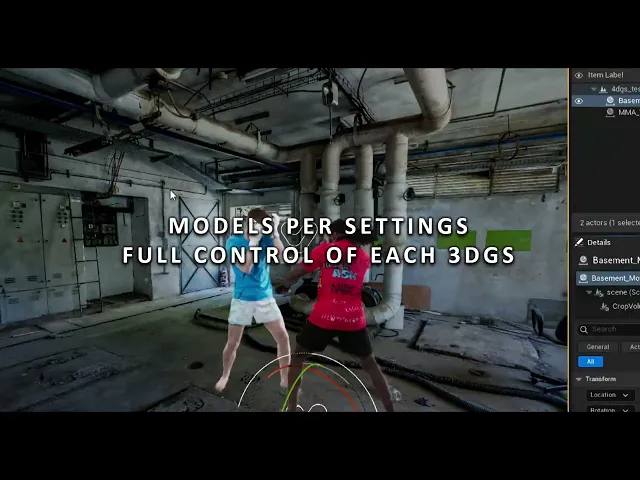
The same Plugin release carries a set of changes that reach beyond 4D. It adds Unreal Engine 5.8 support, ingestion of the SPZ and SOG splat formats alongside PLY, large file support past the previous 4 GB ceiling. DLSS, Sublevel Streaming, and it exposes Radiance Fields actor properties to the Sequencer for keyframing. On the Suite side, User-Provided Masks are new.
Volumetric performance capture and other dynamic splat content now lands in Unreal as a compressed, lightable, Sequencer-driven asset with no per-scene count limit, while the added SPZ and SOG ingestion lets captures produced outside the PLY world enter the same pipeline. It is available now from the Volinga website.