Michael Rubloff
Feb 3, 2026


MetalSplatter, the original Gaussian splatting viewer for Apple Vision Pro, has released version 1.0, bringing with it a set of updates that align the project more closely with modern Gaussian splatting capabilities.
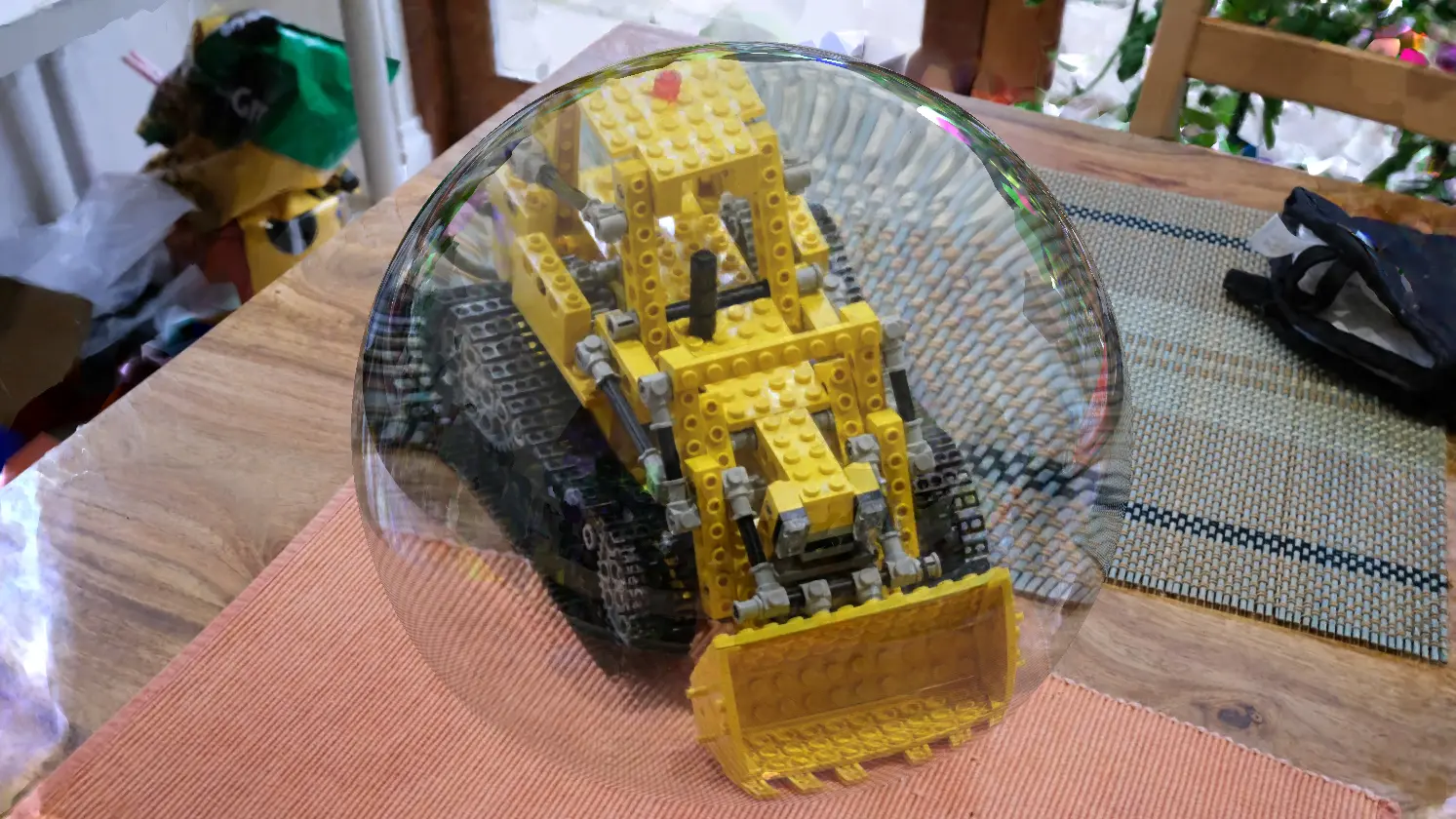
The most consequential change, at least visually, is support for spherical harmonics from SH0 through SH3. Spherical harmonics are what enable lifelike view-dependent effects in Gaussian splatting, despite accounting for a large portion of the memory footprint. In practice, this means captures should appear more realistic when viewed in a headset.
File interoperability also takes a step forward with the formal introduction of native SPZ file input and output. Compared to standard PLY files, SPZ is significantly more compressed. Hopefully, this also opens the door to SOG compatibility at some point in the future. The addition of a SplatConverter command-line tool makes it easier to convert between uncompressed PLY files and SPZ.
Rendering becomes more scalable in this release as well. The ability to load and sort multiple chunks together allows larger scenes to be composed incrementally, which is a practical requirement for real-world datasets rather than lab-scale examples.
The API has been cleaned up and clarified, with concepts like SplatScenePoint giving way to simpler, more direct naming. At the same time, the codebase has moved fully to Swift 6, adopting modern concurrency with async I/O and strict concurrency checking. Minimum deployment now aligns with iOS 18, macOS 15, and visionOS 2.
Rounding out the update are mixed immersion support on visionOS, depth-aware rendering for smoother frame extrapolation on Vision Pro, and broader visionOS compatibility.
MetalSplatter remains open source and MIT licensed, and it can be downloaded for free from the visionOS App Store.