
Miris Launches Public Beta for High-Fidelity 3D Streaming

The streaming company has launched their public beta.

The streaming company has launched their public beta.

Michael Rubloff

Michael Rubloff

Michael is the Founder and Managing Editor of Radiancefields.com

Tags

Miris open beta

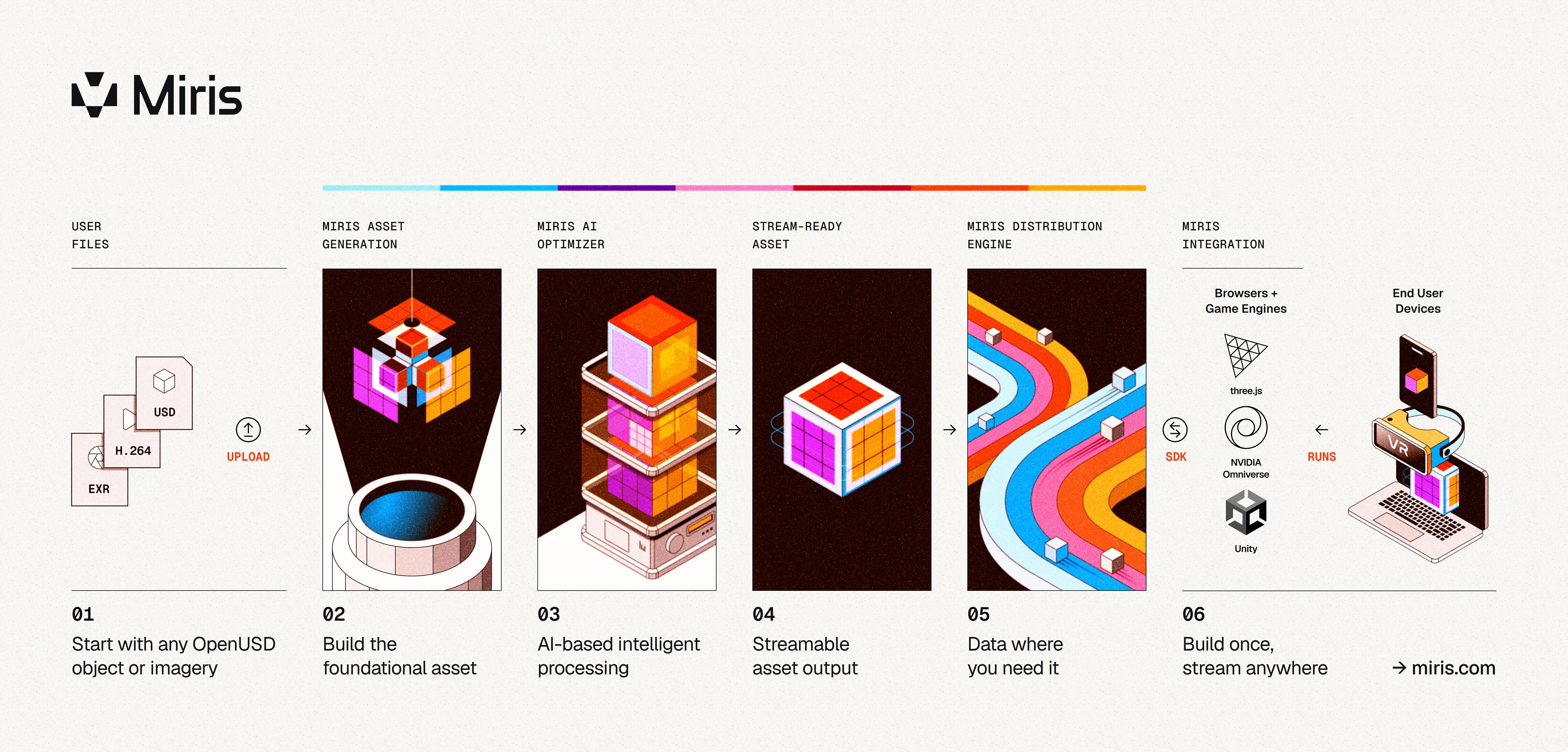
Miris has officially opened its public beta today, introducing a cloud based platform designed to deliver high fidelity 3D assets instantly across devices. The release marks a long time coming from the startup, with the company positioning its approach as a new infrastructure layer for spatial content.

Miris is tackling the delivery problem of web-based 3D.

Until now, developers have largely been forced into one of two approaches. Client side delivery offers scale, but struggles with large assets, long load times, and inconsistent device performance. Pixel streaming preserves fidelity, but comes with latency and a cost structure tied directly to GPU usage per user.

Instead of sending full assets or rendered frames, Miris streams spatial data itself, reconstructing the experience on device in real time. The system aims to combine fast load times, high visual quality, and scalable economics in a single pipeline powered by radiance fields.

According to the company, this allows even large assets to load and become interactive in under a second, without requiring dedicated GPU infrastructure for each user. Users upload assets as OpenUSD, and Miris handles the rest. Behind the scenes, assets are preprocessed and optimized, then delivered through a streaming system that continuously adjusts what data is sent based on the device and network conditions.
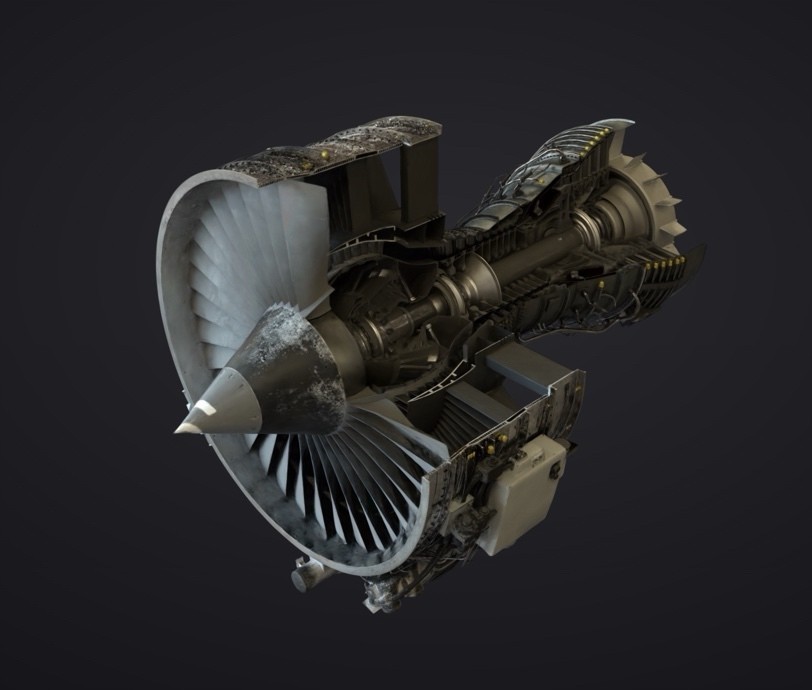
This shifts the problem from rendering to distribution. Instead of paying to render every frame for every user, compute is concentrated upfront during optimization. Once prepared, the asset behaves more like media, streamed efficiently to any device. By decoupling GPU cost from concurrency, Miris brings the economics of 3D delivery closer to video streaming than traditional cloud rendering.

“Until now, companies had to choose between visual quality and cost at scale. We eliminated that choice,” said Sean Looper, CTO of Miris. “Miris is a fundamentally different approach that removes tradeoffs for developers, and we’re excited to open the public beta and kickstart the future of 3D asset delivery.”

With the public beta now live, users can begin testing the platform with both sample content and their own assets.

At launch, Miris is emphasizing a few key capabilities:

  • Sub-second load times for complex assets

  • High fidelity without large client downloads

  • Streaming that scales without per-user GPU costs

There is a clear parallel to how video evolved. Video did not scale globally until the underlying infrastructure matured, with codecs, CDNs, and adaptive streaming working together as a cohesive system. 3D has lacked that equivalent layer. Miris is effectively proposing a spatial content delivery network that treats 3D as something to stream, not download or remotely render.

The public beta is the first opportunity to see how that idea holds up in the real world.

Register for the public beta on Miris’s website.

Thumbnail for Gaussian Splatting News episode 14

18:23

Watch · New every Monday

Open Source 4D Gaussian Splatting

Episode 14 · Nov 23, 2026

Open4DGS is out: an open-source pipeline for 4D Gaussian splatting from Arizona State University’s Narrative and Emerging Media program, with Contrast Media Labs writing the code.

Thumbnail for Gaussian Splatting News episode 14

18:23

Watch · New every Monday

Open Source 4D Gaussian Splatting

Episode 14 · Nov 23, 2026

Featured

Recents

Platforms

KIRI Engine 4.4 Brings 360 Video to 3DGS Scan

KIRI Engine 4.4 adds 360 video input to 3DGS Scan on the web and raises the scan limit to 500 photos or 5 minutes of video, alongside Manual Capture video.

Michael Rubloff

Nov 26, 2026

Platforms

KIRI Engine 4.4 Brings 360 Video to 3DGS Scan

KIRI Engine 4.4 adds 360 video input to 3DGS Scan on the web and raises the scan limit to 500 photos or 5 minutes of video, alongside Manual Capture video.

Michael Rubloff

Platforms

NVIDIA NCore 20.0.0 Adds Asynchronous Reads and zarr v3

NVIDIA NCore 20.0.0 adds zarr-python 3 support, zarr format v3 stores and asynchronous reading APIs, with faster reads of local and remote .itar archives.

Michael Rubloff

Nov 26, 2026

Platforms

NVIDIA NCore 20.0.0 Adds Asynchronous Reads and zarr v3

NVIDIA NCore 20.0.0 adds zarr-python 3 support, zarr format v3 stores and asynchronous reading APIs, with faster reads of local and remote .itar archives.

Michael Rubloff

Platforms

MicroPasts Releases a Splat Viewer for Cultural Heritage

MicroPasts splat-viewer 0.1.2 is a React viewer for 3D Gaussian splats built on Three.js and SparkJS, with a paradata record, a scale bar and splat telemetry.

Michael Rubloff

Nov 26, 2026

Platforms

MicroPasts Releases a Splat Viewer for Cultural Heritage

MicroPasts splat-viewer 0.1.2 is a React viewer for 3D Gaussian splats built on Three.js and SparkJS, with a paradata record, a scale bar and splat telemetry.

Michael Rubloff

Research

HiGS Splits the Splat Tile Three Ways to Render Faster

NVIDIA's HiGS renders Mip-NeRF 360 scenes 2.2x faster than SHARP-GS at 1080p and trains 2.3x to 3.0x faster than Faster-GS across three benchmark datasets.

Michael Rubloff

Nov 26, 2026

Research

HiGS Splits the Splat Tile Three Ways to Render Faster

NVIDIA's HiGS renders Mip-NeRF 360 scenes 2.2x faster than SHARP-GS at 1080p and trains 2.3x to 3.0x faster than Faster-GS across three benchmark datasets.

Michael Rubloff

Thumbnail for Gaussian Splatting News episode 14

18:23

Watch · New every Monday

Open Source 4D Gaussian Splatting

Episode 14 · Nov 23, 2026

Trending Articles
  1. TRENDING
    Loading...
  2. TRENDING
    Loading...
  3. TRENDING
    Loading...
Michael Rubloff

Written by Michael Rubloff

Michael is the Founder and Managing Editor of Radiancefields.com

More from Michael Rubloff

More from Michael Rubloff

Platforms

KIRI Engine 4.4 Brings 360 Video to 3DGS Scan

KIRI Engine 4.4 adds 360 video input to 3DGS Scan on the web and raises the scan limit to 500 photos or 5 minutes of video, alongside Manual Capture video.

Michael Rubloff

Nov 26, 2026

A phone in landscape showing a Gaussian splat street scene with palm trees generated from 360 video in KIRI Engine

Platforms

KIRI Engine 4.4 Brings 360 Video to 3DGS Scan

Michael Rubloff

Nov 26, 2026

A phone in landscape showing a Gaussian splat street scene with palm trees generated from 360 video in KIRI Engine

Platforms

KIRI Engine 4.4 Brings 360 Video to 3DGS Scan

KIRI Engine 4.4 adds 360 video input to 3DGS Scan on the web and raises the scan limit to 500 photos or 5 minutes of video, alongside Manual Capture video.

Michael Rubloff

Nov 26, 2026

A phone in landscape showing a Gaussian splat street scene with palm trees generated from 360 video in KIRI Engine

Platforms

NVIDIA NCore 20.0.0 Adds Asynchronous Reads and zarr v3

NVIDIA NCore 20.0.0 adds zarr-python 3 support, zarr format v3 stores and asynchronous reading APIs, with faster reads of local and remote .itar archives.

Michael Rubloff

Nov 26, 2026

NCore point-to-camera projection of lidar points onto a camera image from NVIDIA Hyperion data

Platforms

NVIDIA NCore 20.0.0 Adds Asynchronous Reads and zarr v3

Michael Rubloff

Nov 26, 2026

NCore point-to-camera projection of lidar points onto a camera image from NVIDIA Hyperion data

Platforms

NVIDIA NCore 20.0.0 Adds Asynchronous Reads and zarr v3

NVIDIA NCore 20.0.0 adds zarr-python 3 support, zarr format v3 stores and asynchronous reading APIs, with faster reads of local and remote .itar archives.

Michael Rubloff

Nov 26, 2026

NCore point-to-camera projection of lidar points onto a camera image from NVIDIA Hyperion data

Platforms

MicroPasts Releases a Splat Viewer for Cultural Heritage

MicroPasts splat-viewer 0.1.2 is a React viewer for 3D Gaussian splats built on Three.js and SparkJS, with a paradata record, a scale bar and splat telemetry.

Michael Rubloff

Nov 26, 2026

MicroPasts

Platforms

MicroPasts Releases a Splat Viewer for Cultural Heritage

Michael Rubloff

Nov 26, 2026

MicroPasts

Platforms

MicroPasts Releases a Splat Viewer for Cultural Heritage

MicroPasts splat-viewer 0.1.2 is a React viewer for 3D Gaussian splats built on Three.js and SparkJS, with a paradata record, a scale bar and splat telemetry.

Michael Rubloff

Nov 26, 2026

MicroPasts

New to Gaussian Splatting? Start here

Radiance fields, explained from the ground up: what a Gaussian splat is, how to capture one, and which tools and gear to start with.

Newsletter

Keep up with the field.

New research, tools and captures from the Radiance Fields newsroom, in your inbox. Free, no spam.

Gaussian Splatting News on YouTube

The week in radiance fields, every Monday.

Gaussian Splatting News on YouTube

The week in radiance fields, every Monday.

Gaussian Splatting News on YouTube

The week in radiance fields, every Monday.

Gaussian Splatting News on YouTube

The week in radiance fields, every Monday.