
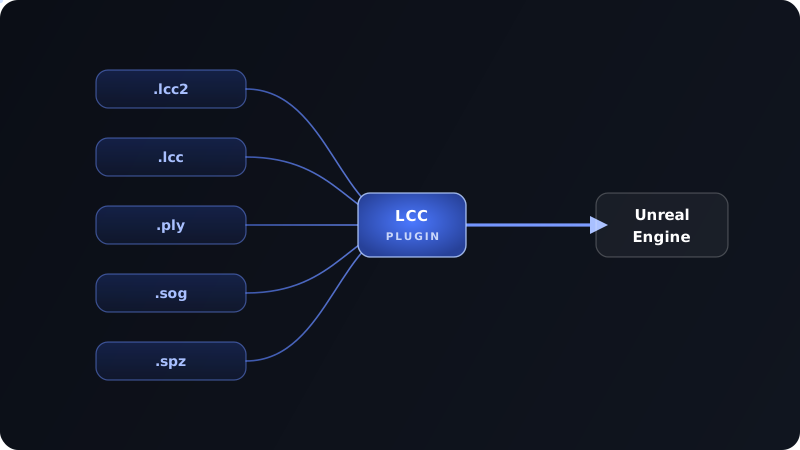
XGRIDS has released LCC4Unreal v3.0.0, a major update to its Unreal Engine SDK. The LCC-Unreal-SDK is for rendering Lixel CyberColor gaussian splats natively inside Unreal, and it is the first version of the plugin to ingest the broad open format set rather than only XGRIDS' own capture output.
v3.0.0 adds PLY loading, SOG single file loading, and SPZ support compatible with both the v3 and v4 revisions of Niantic's compressed splat container. Until now the Unreal path had been effectively LCC centric, tied to the format XGRIDS open sourced to standardize its pipeline and later revised in LCC Version 2. A scene authored as a raw PLY, exported to SOG, or delivered as an SPZ had no direct route into the engine without conversion. It brings the Unreal SDK roughly in line with the format breadth XGRIDS had already been building elsewhere in its stack, such as their Unity SDK.
On rendering, the release adds three normal simulation methods, ViewFacing, Hemispherical, and Fixed, giving control over how per splat normals are derived for lighting, alongside a Mip Filter toggle for splat rasterization that trades sharpness against aliasing at distance. Post Process Volume support, NVIDIA DLSS upscaling, Color Correction Region support, and an ACES/OCIO color space conversion workflow also are joining the release. These hook splat rendering into Unreal's film grade color and post chain. Previously this was only something that the Volinga Unreal Engine Plugin supported.
The Pro tier adds ProxyMesh, the ACES workflow, and large scale clipping volume support, for city and building scale captures the PortalCam and LCC Studio pipeline tends to produce. Rounding out the release are fixes for the stereo rendering (VR) black screen, an occlusion anomaly when 3DGS depth sits in front of the scene, D3D12 RenderTarget texture compatibility, a shutdown hang during cache thread release, and an LCC2 scaling error, plus improved Deferred Lit Mode rendering quality.
There are many consequential updates in this release for people who have been wanting to work professionally with splats inside of Unreal Engine. It is available now.


